
26 Acres Cleared: Gurugram Forest Department Razes Illegal Aravali Farmhouses
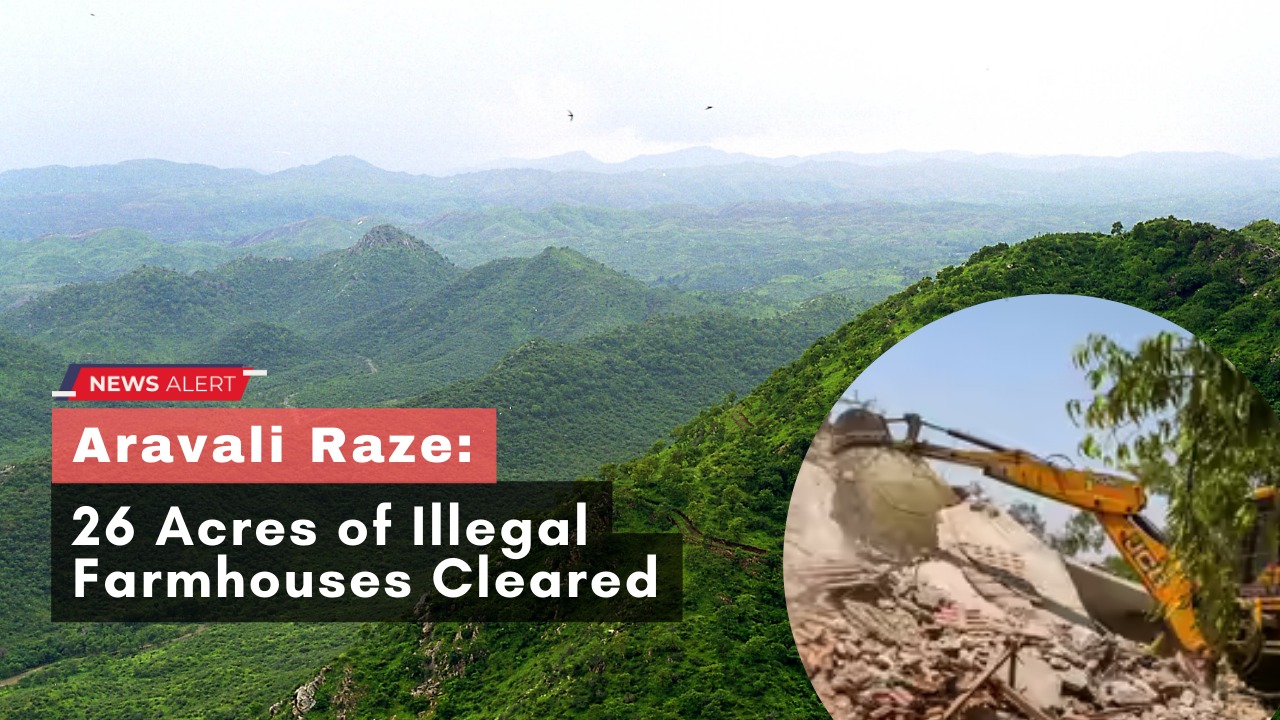
GURUGRAM - In a major enforcement drive to protect the National Capital Region’s "green lungs," the Gurugram Forest Department has demolished two luxury farmhouses and a massive concrete boundary wall in the protected Raisina Hill area. The operation, conducted on Monday, cleared approximately 26 acres of land that had been illegally occupied for unauthorized construction.
The action serves as a stern reminder of the tightening grip of regulatory bodies on the ecologically sensitive Aravali landscape.
The Violation: A "Flagrant" Disregard for Norms
According to forest officials, the demolition was triggered by the discovery of fresh construction activity that showed a blatant disregard for existing laws. Using heavy earthmovers, the department dismantled structures being erected in direct violation of the Aravali Notification of 1992.
Beyond the buildings themselves, officials recorded significant environmental damage. The drive followed reports of a 30-meter-wide road being illegally carved into the protected hills, which involved the felling of over 100 protected trees to connect private plots to the main road below. Large-scale stripping of vegetation, cut stumps and exposed roots were visible across the ridge, marking sites where developers attempted to "tame" the terrain.
The Legal Framework: Why This Land is Protected
The Raisina Hill area is subject to stringent environmental laws designed to prevent the degradation of the mountain range. Key legal hurdles include:
-
Aravali Notification (1992): This law strictly restricts the construction of roads, buildings, and boundary walls. It also prohibits tree felling without explicit prior approval.
-
Gair Mumkin Pahad Classification: A significant portion of this land is classified as Gair Mumkin Pahad (uncultivable hill). Under the law, non-forest activities are strictly prohibited on such land without high-level statutory clearances.
-
NGT Scrutiny: The National Green Tribunal (NGT) has recently taken suo motu cognisance of illegal rebuilding in this zone. The tribunal recently labeled the reconstruction of previously razed structures at sites like Ansal's Aravali Retreat a "flagrant violation" of court orders.
Environmentalists note that even minor "repairs" to old forest paths with concrete can permanently damage natural drainage patterns and disrupt wildlife movement, making the department’s "zero-tolerance" stance vital for the region's ecology.
Buyer’s Checklist: DOs When Buying a Farmhouse in Gurugram
To ensure your investment is secure and does not end up under a bulldozer, follow these essential guidelines:
1. Verify Land Classification (Check the Jamabandi) Always check the Jamabandi, which is essentially the "Title Deed" or the official Record of Rights for the land. It tells you who owns the land and, more importantly, what the land is officially meant for.
If the land is marked as "Gair Mumkin Pahad" (Hill land where nothing can be grown or built) or falls under the PLPA (Punjab Land Preservation Act), it is legally protected forest land. Building here is strictly restricted and often impossible to legalize.
2. Demand a CLU (Change of Land Use) Certificate Never rely on verbal promises. In Haryana, most land is originally designated for "Agricultural" use. If you want to build a farmhouse, the owner must obtain a CLU (Change of Land Use) certificate.
This is an official permission from the government allowing the land to be used for a specific non-agricultural purpose (like a residential farmhouse). Without a CLU and approved plans from the DTCP (Department of Town and Country Planning), any brick you lay is considered illegal.
3. Check for Encroachment Red Flags Inspect the property physically. A common "trick" is to build boundary walls that enclose standing trees to make them look like part of a private garden. This is an illegal practice that usually precedes total land clearing. These "tree walls" are the first thing forest inspectors look for during drone or ground surveys.
4. Confirm NGT Compliance Ensure the land is not part of an active case with the National Green Tribunal (NGT). Think of the NGT as the supreme watchdog for the environment. If the NGT has issued a "stop-work" order or a demolition mandate for a specific colony (like Raisina or Ansal Retreat), buying there is a guaranteed financial loss.
5. Consult a Legal Expert The laws governing the Aravalis are a complex mix of state and central mandates. Always engage a lawyer specializing in NCR land laws. A standard property lawyer may not understand the specific environmental restrictions that override normal property rights in the hills.
Conclusion
While the allure of a hillside retreat is undeniable, the recent demolitions in Raisina prove that the authorities are committed to restoring the ridge. At FarmlandBazaar, we urge investors to prioritize legal transparency over scenic views to ensure a secure and peaceful farm-living experience.
Stay tuned to FarmlandBazaar for more updates on land regulations and premium, compliant farm-living opportunities.
Written by Farmland Bazaar Team
Agricultural assets advisor contributing to Farmland Bazaar v2. Focusing on organic investments, soil analysis reports, and deed checks.