
Building Resilient, Profitable and future-proof Farmlands: Key Lessons for Developers from Dr. S.C. Tripathi
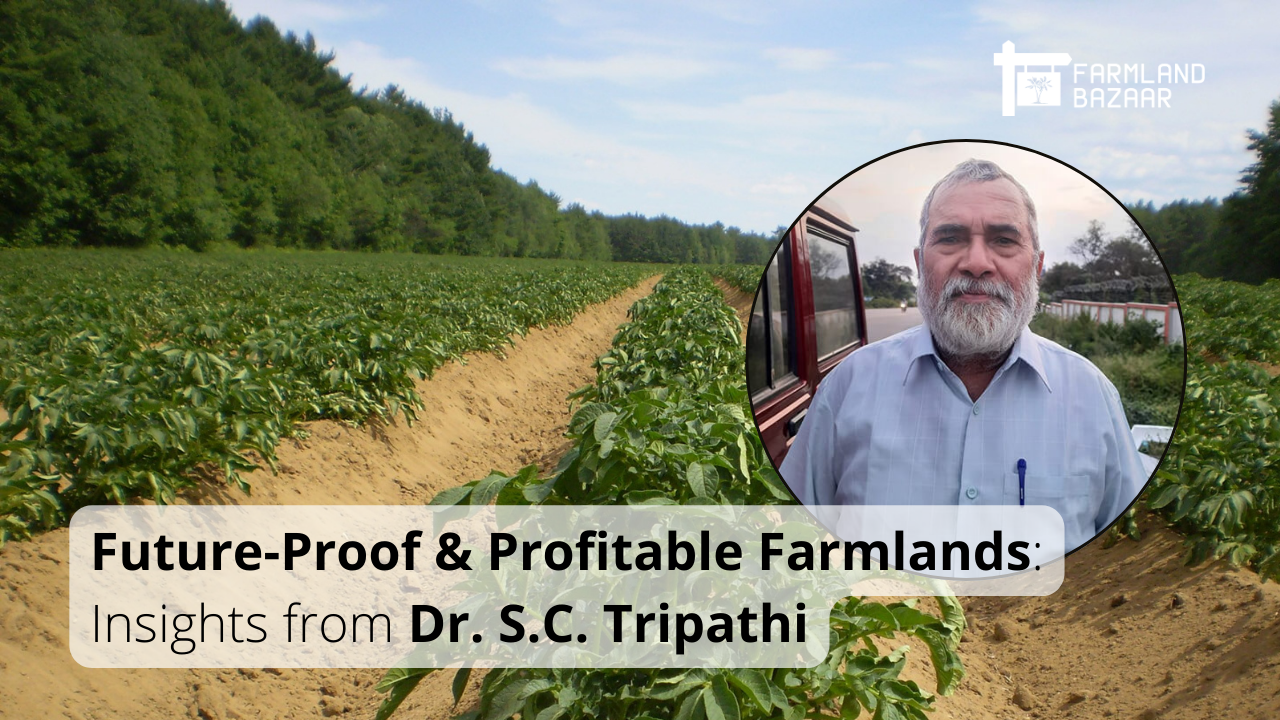
At Farmland Bazaar, we believe farming is more than a profession—it’s a way of life that nurtures both nature and people. As advocates of sustainable agriculture, we aim to educate and empower individuals with knowledge about farming innovations, self-reliant agriculture, and eco-friendly practices that heal the earth.
In this expert series, we bring you insights from leading agricultural minds to help farmland developers, investors, and enthusiasts make informed decisions. Dr. S.C. Tripathi, a pioneer in soil microbiology and sustainable farming, joins us to share his invaluable insights on future-proofing farmlands. With over 52 years of expertise in soil science, plant protection, and agricultural innovation, he is a distinguished agricultural scientist, consultant, and thought leader shaping the future of resilient farming.
About Dr. S.C. Tripathi
Dr. Tripathi holds a D.Phil in Soil Microbiology and has contributed extensively to the field of agriculture, authoring over 62 research papers in national and international journals. His research covers plant pathology, microbiology, pesticide residues, weed control, nematology, and soil science.
With a career spanning both research and applied agricultural sciences, he has played a pivotal role in soil health management, plant protection, crop nutrition, and sustainable cultivation techniques. His expertise extends to biofertilizers, biocontrol, agroforestry, protected farming, and genetic engineering, including advancements in tissue culture for crops like cabbage and cauliflower.
Key Roles & Contributions
-
Former Research Scientist & Consultant for leading agri-tech companies, including Cargill India, Beizo Holland, and Tata Group.
-
Agriculture Consultant for Art of Living Ashram, Bangalore, overseeing the conversion and sustainable cultivation of over 300 acres.
-
Advisor for West Africa Agritech (Benin), CONTROPEST Bangalore, and Green Crop Inter Pvt Ltd., Pune.
-
Extensive field experience in wasteland development, social forestry, and eco-friendly farming practices.
Currently, Dr. Tripathi serves on the board of Aranyakaa Farms, where he provides expert guidance on agricultural planning, execution, and management.
In this exclusive conversation, Dr. Tripathi shares key lessons on building resilient, future-ready, and profitable farmlands—offering valuable insights for developers and farmland investors alike.
1.What are the key Principles that make farming and agriculture a long lasting, effective, and profitable profession for buyers?
Ans. To achieve long-term success in farming, it is essential to adopt practices that are economically viable, environmentally sustainable, and socially acceptable. This includes following Good Agricultural Practices (GAP), which prioritize sustainability, food safety, and health while minimizing environmental impact. GAP methods may vary across institutions and corporations, but the core principles remain consistent in promoting responsible and productive farming.
2. What are the current trends in sustainable agriculture that farmland developers should focus on?
Ans. Sustainable agriculture is evolving with several key trends. Organic farming is gaining traction as it reduces reliance on chemicals, using natural fertilizers and pest control to maintain soil health and biodiversity. Farm-based technology, including precision farming tools, helps optimize water, fertilizers, and energy use, enhancing productivity while reducing waste.
Mulching and drip irrigation are essential for water conservation, helping to retain moisture and reduce weed growth. Protected cultivation, such as greenhouses or shade nets, allows for better control of environmental conditions, resulting in improved yields and quality.
Moreover, hydrophonic and vertical farming are becoming popular, particularly in urban areas, as they maximize space and water use while reducing the need for soil. Seed-to-harvest cultivation, the complete agricultural process from planting seeds to harvesting mature crops, ensuring optimal growth and yield. Lastly, high-density planting in horticulture helps increase yields within limited spaces, making farming more efficient
These trends not only make farming more sustainable but also enhance profitability by improving resource use and reducing environmental impact.
3. How can farmland be effectively prepared with greenery and plantations to enhance its appeal and reliability for prospective buyers?
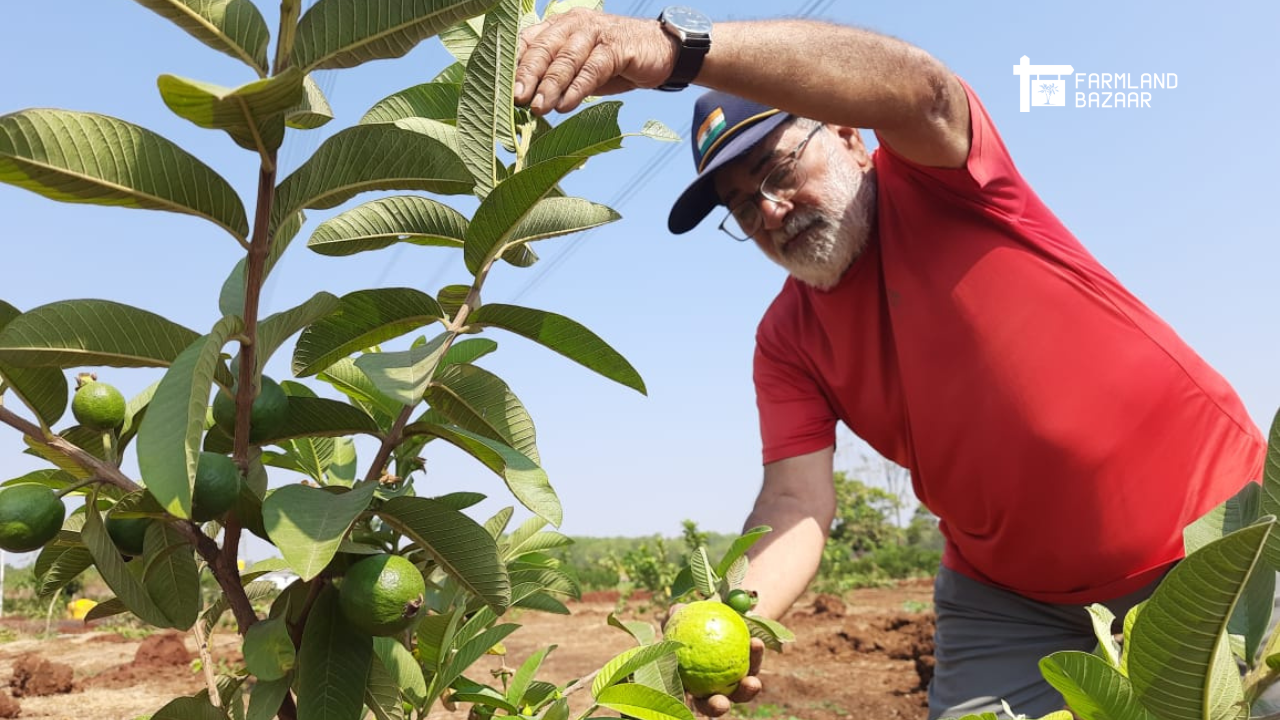
Ans. Agriculture and plantation : To enhance farmland appeal, a mix of short-duration crops, long-term plantations, and ornamental plants is ideal. For short-duration crops, options like papaya, banana, grafted mangoes, citrus fruits, guava, starfruit, custard apple, and avocado are excellent. These crops typically start fruiting within 1 to 3 years, offering early returns and adding aesthetic value.
For long-term plantations, trees such as teak, mahogany, sandalwood, and Melia Dubia are great investments, increasing land value over time. To further beautify and define the land, hedges and bushes like bougainvillea, bamboo, duranta, and acalypha can be planted. These ornamental plants add vibrant colors, create natural boundaries, and provide shade.
Combining productive crops with attractive landscaping ensures the farmland is both visually appealing and economically viable, increasing its reliability and desirability for buyers.
4. How important is agroforestry and crop diversity in maintaining long-term environmental and economic sustainability of farmland developments?
Ans: Agroforestry and crop diversity are vital for sustainable farmland development. They work together like an insurance policy, protecting against the adverse impacts of unpredictable weather, pests, and diseases. Agroforestry enhances soil health, prevents erosion, and improves water retention by combining trees and shrubs with crops.
Crop diversity ensures that farmers are not overly reliant on a single crop, reducing risks of complete failure during unfavorable conditions. Together, they create a resilient system that supports long-term productivity, boosts biodiversity, and provides economic stability while maintaining environmental balance.
5. How can one select the most suitable plantation varieties for a piece of land?
Ans: As an agricultural scientist, I suggest starting with local plants already growing in and around the land, as they are naturally suited to the area. Next, pick crop varieties that grow quickly and are resistant to pests and diseases to reduce risks. Lastly, for areas with high temperatures or less water, choose drought-resistant crops that can thrive in such conditions. These steps will help ensure healthy plantations and good yields over time.
6. How can we improve soil health to maximize both agricultural yield and long-term value of farmland properties?
Ans: Improving soil health is essential for sustainable farming and long-term land value. Start with a detailed soil test to analyze its physical and chemical properties. This helps in understanding nutrient deficiencies and soil structure. Green manuring is highly effective—plant crops like Sesbania, Sunhemp, or Cowpea, which add organic matter, fix nitrogen, and improve soil fertility when plowed back into the soil.
Incorporating bio-fertilizers like bacterial fertilizers, mycorrhizal fungi, and other beneficial microbes further boosts soil health by enhancing nutrient availability and root growth. These practices significantly enhance crop yields while ensuring the soil's long-term productivity and value of farmland.
7. What emerging technologies in agriculture should developers be aware of to future-proof their projects?
Ans: To future-proof agricultural projects, developers should focus on sustainable and innovative technologies. Utilize farm-based methods like converting biomass into manure or cow dung compost, and implement companion cropping and green manuring to enhance soil fertility. Integrating blue-green algae and Azolla as biofertilizers can improve nutrient levels naturally.
Effective water management through groundwater recharge, rainwater harvesting, and waterbody creation is essential. Prepare natural soil conditioners such as Jeevan Amrit, Panchgavya, and enzymes, while using botanical insecticides like Neem or Pongamia oil for pest control.
Seed treatments like Bijamrit and pest solutions like Brahmastra further promote eco-friendly practices, ensuring long-term sustainability and project appeal.
8. What climate-resilient farming techniques can developers implement to protect farmlands from environmental challenges?
Ans: Climate-resilient agriculture (CRA) involves adopting practices that enhance the system's ability to adapt, mitigate, and recover from climate-related disturbances. It focuses on minimizing damage and ensuring quick recovery for long-term sustainability.
In 2023, the Indian government emphasized climate-resilient farming, as highlighted in Policy Paper 65. Prime Minister Narendra Modi promoted millet crops and released 109 climate-resilient and biofortified varieties. These include Pusa 1801 millet, rich in zinc and iron; Pusa 2002 millet, a 70-day crop compared to the usual 110 days; Girnar-6 groundnut, known for high oil content; and Nandyal 109, a chickpea variety adapted to adverse climates.
Developers should prioritize such resilient crop varieties and integrate adaptive farming techniques to mitigate environmental challenges effectively.
Conclusion
At Farmland Bazaar, sustainability drives our mission to educate and empower farmland developers, investors, and enthusiasts. Through expert insights like those from Dr. S.C. Tripathi, we promote future-proofing farmlands with eco-friendly and resilient farming. Follow us for more on sustainable agriculture!
Written by Farmland Bazaar Team
Agricultural assets advisor contributing to Farmland Bazaar v2. Focusing on organic investments, soil analysis reports, and deed checks.