
From Corporate Lawyer to Innovative Farmer: The Story of Keya Salot and Farm2Fam
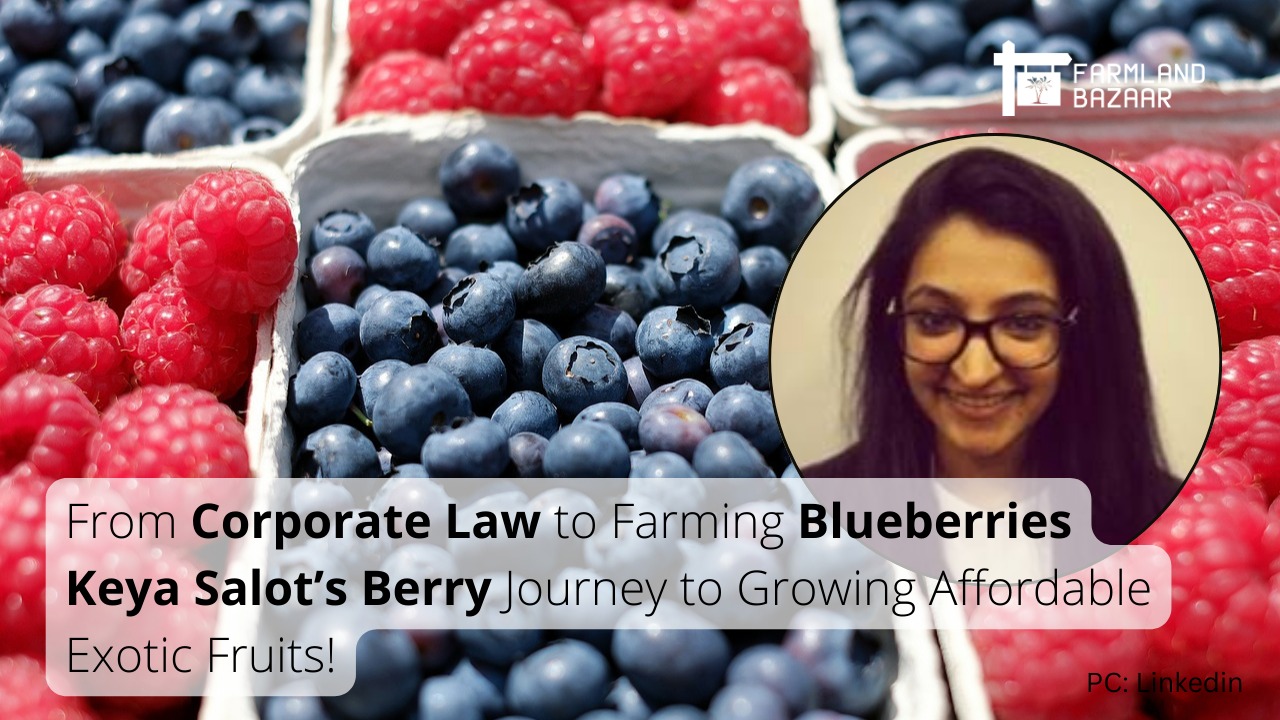
In 2021, Keya Salot made a life-changing decision. After years of working as a corporate lawyer in Mumbai, she left behind her legal career to start Farm2Fam, a farming venture aimed at reducing India's dependency on imported exotic fruits, such as blueberries and raspberries. By cultivating these high-value crops locally, Keya envisioned not only bringing down prices but also making these fruits accessible beyond the metros.
A Shift from Law to Agriculture
Keya’s journey into agriculture wasn’t born out of impulse but was the culmination of years of reflection. Raised in Mumbai, she pursued law at Government Law College and worked in top law firms for nearly four years. But she always felt a pull toward something else—something deeply rooted in nature. “Law was always a stepping stone for me. I wanted to use it as a tool for entrepreneurship, and my true calling was in agriculture,” Keya reflects.
In 2018, Keya took a break from law to explore farming, a field she knew little about. She began by growing 30 varieties of microgreens on a vertical set-up in her terrace garden. Six months later, she was supplying these greens to over 50 restaurants. The success of this venture fueled her confidence, prompting her to dream bigger.
The Birth of Farm2Fam
After a year of in-depth research, Keya Salot identified a significant gap in India's agricultural landscape. While the sector remains largely dominated by staple crops like rice, wheat, and sugarcane, there is little focus on high-value, exotic produce. This became especially evident as demand for fruits like blueberries and raspberries surged in urban areas, driven by their growing popularity for health benefits. Yet, despite this demand, India's imports of these fruits remain high, making them costly and inaccessible to many.
According to the US Highbush Blueberry Council, blueberry imports to India skyrocketed from nearly zero in 2009 to 1,900 tonnes in 2020, positioning India as one of the world's largest importers of blueberries. This trend highlighted an untapped opportunity for local cultivation.
In 2021, Keya founded Farm2Fam in Talegaon, Pune, with the aim of cultivating these exotic berries locally. Her goal was clear: reduce reliance on imports, make blueberries and raspberries more affordable for Indian consumers, and create a sustainable, high-value agricultural venture. In 2022 alone, India imported 870 tonnes of exotic fruits like raspberries and blueberries—a 148% increase from the previous year. Yet, the majority of these fruits still come from countries like the US, Mexico, and Poland.
Overcoming Climate Challenges with Innovation
One of the biggest hurdles Keya Salot faced was adapting blueberries and raspberries, typically grown in temperate climates, to the tropical conditions of Maharashtra. Blueberries need cold winters and consistent rainfall, while raspberries thrive in cool summers and mild winters—conditions rarely found in India. To overcome this challenge, Keya, along with her husband Vimal Salot, traveled to Mexico and Europe in late 2019 to study farming techniques in regions with similar climates to Maharashtra. Inspired by European methods, Keya imported the first batch of saplings suited for Indian conditions in 2020 and began experimenting.
Keya innovated by developing low-cost tunnel structures for her farm, which proved crucial in protecting the crops from extreme temperatures and unpredictable rainfall. These tunnels help regulate temperature and humidity, providing warmth during cold nights and cooler conditions during hot days. This innovation not only safeguards the crops but also conserves water—a key consideration in water-scarce regions—and extends the harvest period for blueberries to 4-5 months, compared to the usual few weeks.
“In India, agricultural infrastructure mainly uses polyhouses, which add heat rather than protect from it. Our tunnels allowed us to shield the crops from extreme heat while maintaining ideal growing conditions,” Keya explains. With this method, Keya successfully cultivated seven varieties of exotic berries, including blueberries and raspberries.
Overcoming Land Challenges and Scaling Up
Securing land for farming was another major challenge. As a city dweller with no prior experience in rural agriculture, Keya found it difficult to gain the trust of local farmers. “It was tough to convince farmers to lease their land to someone from the city,” Keya admits. However, after months of persistent negotiations, she secured her first plot and began building trust within the local farming community. Over time, she expanded her farm to 20 acres.
Today, Farm2Fam is set to produce over 135 tonnes of berries this season, including seven exotic varieties. Keya’s farm has flourished, thanks to partnerships with major retailers like Star Bazaar, Reliance Retail, and Nature’s Basket, as well as delivery platforms such as Swiggy and Zepto.
Reshaping India’s Agricultural Landscape
Keya’s journey from corporate lawyer to farmer has been driven by more than just the pursuit of profit. For her, it’s about reshaping the future of agriculture in India. “Agriculture is often seen as a low-margin field, but with the right approach, it can be highly profitable and sustainable,” she says.
Her innovative farming methods, combined with her legal background, have allowed Farm2Fam to navigate complex regulations both domestically and internationally. Today, her farm is not just cultivating berries—it's cultivating the future of agriculture in India.
Reflecting on her path, Keya believes her impact in agriculture far exceeds what she could have achieved in law. "If I had only practiced law, my impact would have been smaller. In farming, I’m not just building a business—I’m changing the way India approaches agriculture,” she adds. Together with Vimal, Keya continues to innovate, proving that passion, persistence, and creativity can drive meaningful change in even the most traditional industries.
Written by Farmland Bazaar Team
Agricultural assets advisor contributing to Farmland Bazaar v2. Focusing on organic investments, soil analysis reports, and deed checks.