
From Smog to Serenity: How Delhi’s Pollution is Driving the Move to Luxury Farmlands and Farmhouses Near Delhi
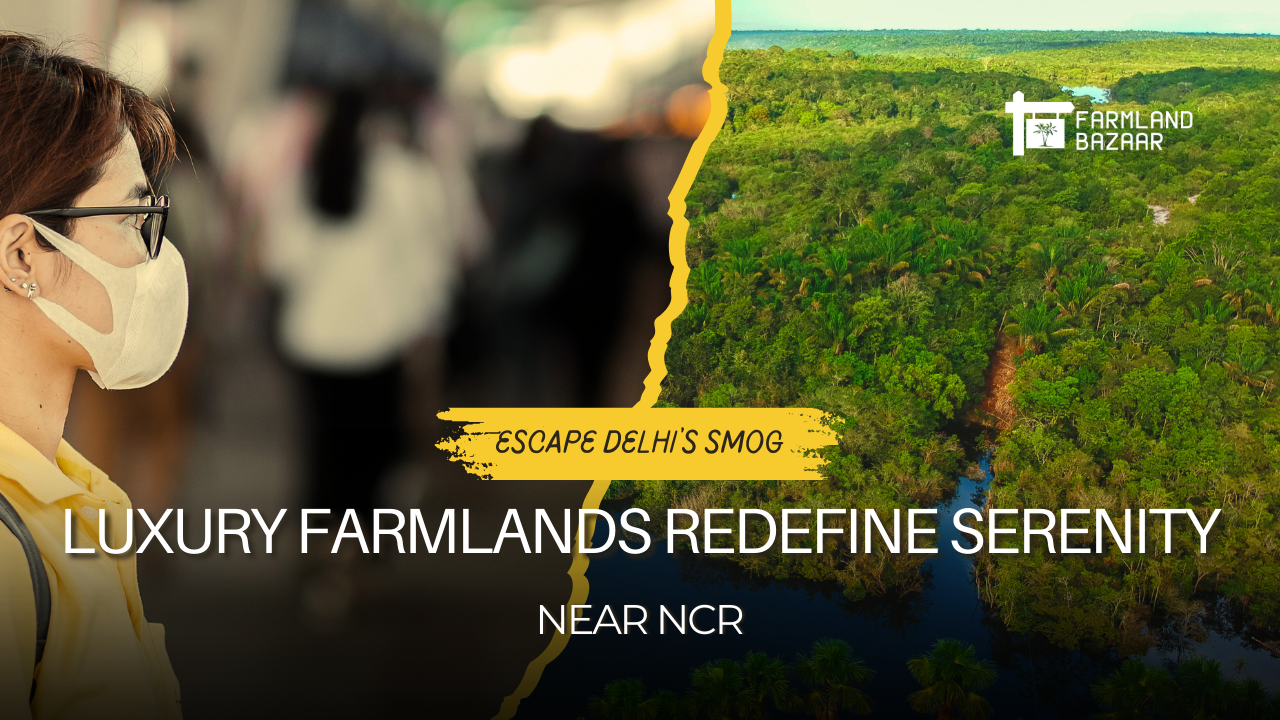
Delhi residents woke up to a thick blanket of smog, marking another grim day in one of the world's most polluted cities. The air quality has plunged to severe levels, with pollution 30-35 times higher than the safe limits recommended by the World Health Organization (WHO). The WHO guidelines state 24-hour average concentrations of PM 2.5 should not exceed 15 micrograms per cubic metre more than three or four days per year. This worsening crisis, fueled by stubble burning, vehicular emissions and winter weather conditions, has left the city gasping for clean air.
On November 18, 2024, Delhi saw its worst air pollution in four years, with the AQI reaching around 800. In comparison, the AQI hit 700 in 2021, leading to an air emergency. This alarming increase highlights the growing pollution problem in the city, showing that urgent action and long-term solutions are needed.
According to IQAir, a Swiss-based Air Quality Index (AQI) monitoring group, with pollution levels in some areas touching an alarming AQI of 500, more and more people are seeking refuge in greener, quieter environments. This growing migration from Delhi’s chaos to the serenity of luxury farmlands and farmhouses highlights a significant shift towards healthier living and a slower-paced lifestyle.
Understanding Delhi’s escalating air pollution crisis
Delhi’s air quality has reached dangerous levels since October 2024, with the Air Quality Index (AQI) rising to a "severe plus" level of 491. Pollution is caused by vehicle emissions, industrial work, construction dust, and stubble burning in nearby states, worsened by low wind and cold weather. PM2.5 levels, which are harmful particles in the air, have averaged 422.8 µg/m³, much higher than India’s limit of 60 and the WHO’s safe limit of 15. These pollution levels pose serious health risks for everyone, especially the elderly, children, and pregnant women.
To address this crisis, the Supreme Court has enforced strict pollution control measures under GRAP-4 in Delhi-NCR. Health experts warn of immediate problems like breathing issues and heart complications, along with long-term risks like chronic lung diseases and even cancer. As the situation worsens, many people are rethinking where they live, focusing on places that are safer for their health.
The Impact of Pollution on Mental Health
-
Mental Health Decline: Prolonged exposure to air pollution, especially fine particulate matter (PM2.5), has been linked to rising cases of depression, anxiety, and cognitive decline.
-
Vulnerable Groups: Children, elderly, and individuals with pre-existing conditions are most susceptible to the mental health impacts of pollution.
-
Physical & Psychological Stress: Pollution-induced inflammation in the brain contributes to chronic fatigue, emotional burnout, and reduced motivation.
-
Social Isolation: Limited outdoor activities due to poor air quality lead to increased loneliness and social withdrawal, exacerbating mental health issues.
-
Bidirectional Health Effects: Poor physical health due to pollution worsens mental health, creating a vicious cycle that can be difficult to break.
Experts, including Kamaldeep Bhui from the University of Oxford, have emphasized the link between air pollution and mental health. Bhui explains that fine particulate matter (PM2.5) not only harms the lungs but also reaches the brain, triggering systemic inflammation that exacerbates mental disorders like anxiety and depression. Furthermore, the intense urbanization in Delhi, marked by high population density, traffic congestion, and industrial emissions, amplifies these health challenges, making it crucial to address both environmental and mental health concerns simultaneously. The interconnected nature of physical and mental well-being requires a comprehensive approach to combat the crisis.
Recent Trends to Combat the Rising AQI
1. Rise of Green Mobility
With increasing awareness about pollution from vehicles, many residents are shifting to electric vehicles (EVs), carpooling, and using public transport. Carpooling can reduce vehicle emissions by up to 30%. Delhi's public transport includes the Delhi Metro, DTC and DIMTS bus system, auto-rickshaws, cycle-rickshaws, e-rickshaws, Grameen Seva, and taxis. The metro has nearly 7 million commuters per day, and the bus network carries an average of 2.5 million per day. 106 new Delhi Transport Corporation (DTC) buses are operating 1,844 trips daily, with 40 services dedicated to government employees. The adoption of EVs is supported by improved infrastructure, including charging stations across the city, reducing emissions significantly.
2. Smarter AQI Monitoring
Real-time air quality monitoring through apps like AQI.in has become a common trend. People are using these tools to plan daily activities, avoiding outdoor exposure during "Severe" pollution days and choosing healthier alternatives. Other apps for monitoring air quality include: SAFAR (System of Air Quality and Weather Forecasting and Research), BreezoMeter, MyAQI by CPCB, and Air Matters.
3. Support for Government Policies
Citizens are actively participating in government-led initiatives such as vehicle bans on high-pollution days and the Graded Response Action Plan (GRAP). Awareness campaigns and compliance with pollution control measures are gaining momentum as collective efforts to combat Delhi's pollution. To tackle traffic congestion and reduce emissions, Chief Minister Atishi introduced staggered working hours for government offices. The Municipal Corporation of Delhi will operate from 8:30 AM to 5:00 PM, Central Government Offices from 9:00 AM to 5:30 PM, and Delhi Government Offices from 10:00 AM to 6:30 PM.
4. Growing Adoption of Solar Power
Encouraging the installation of solar panels in homes, apartment complexes, and commercial spaces is emerging as a sustainable trend in Delhi. With reduced costs and government subsidies, solar energy has become a financially viable option for many households. Expanding the use of decentralized solar power can significantly reduce dependency on coal-based thermal power plants, which are major contributors to air pollution and climate change. Experts suggest temporarily halting the operation of thermal power plants in Delhi-NCR when the AQI exceeds 200 to mitigate pollution levels effectively.
5. Movement to Farmlands and Farmhouses
The rising pollution levels in Delhi have prompted many residents, especially affluent families and young professionals, to move towards luxury farmlands and farmhouses near Delhi, in rural and semi-urban areas. Locations like Alwar, Meerut, and Greater Noida are becoming popular for their greener environments and peaceful lifestyle, offering a much-needed escape from urban chaos.
Buyers are increasingly opting for smaller plots of around 1,000 yards, priced between ₹1 crore and ₹1.25 crore, as cost-effective alternatives to city properties. Improved connectivity and infrastructure make these areas easily accessible, while the investment potential of agricultural land, with annual appreciation rates of 10–15%, adds to their appeal.
Why the Shift Towards Farmland and Farmhouses is Increasing with the Rise in Delhi’s AIQ Level?
As of December 13, 2024, Delhi's air quality remains in the severe category. Key areas like Shadipur reported an AQI of 454, with other locations such as Narela (444), Ashok Vihar (438), and Anand Vihar (436) also showing severe pollution levels, according to the Central Pollution Control Board (CPCB).
Due to this crisis, many people are choosing to move to luxury farmlands and farmhouses in areas like Gurugram, Greater Noida, Ghaziabad, Sohna and Mathura. These places offer cleaner air and a peaceful lifestyle, away from the city's pollution.Better roads and transport links have made it easier to reach these rural areas, making them an attractive option. Along with a healthier lifestyle, these areas offer good investment potential, as agricultural land increases in value by 10-15% each year. This trend is especially popular among young professionals who want to build their property portfolios.
For some, buying farmland is not just about investment but also about reconnecting with nature and family. Many people want a space where they can relax, away from the pollution, and live in a peaceful environment. This shift shows that people are focusing more on health, serenity, and making smart investments for the future.
Locations Witnessing Demand
The demand for farmland and farmhouses is rising in areas around Delhi, such as Sohna, Manesar, Greater Noida, Gurugram, Ghaziabad and Neemrana. These locations offer cleaner air, rural surroundings, and better connectivity to Delhi, making them ideal for those seeking a peaceful lifestyle. Additionally, places like Mathura and Aligarh are gaining popularity due to their cultural appeal and affordable land prices. These regions not only provide residents with access to cleaner air but also offer lifestyle features like expansive plots, fresh produce, and a connection with nature.
Additionally, platforms like Farmland Bazaar are helping individuals identify properties that fit their needs. By connecting buyers with farmland owners, these platforms simplify the process of purchasing farmland, helping people find their dream escape from Delhi’s pollution. One can simply explore different farmlands just by filtering out “farmland near Delhi” and you will get the best of the properties.
Challenges to Consider
1. Lack of Urban Amenities
Many rural areas lack basic urban amenities like quality healthcare, good schools, and entertainment options. This can be a significant concern for families who are used to the conveniences of city life, such as nearby hospitals, shopping malls, and restaurants.
2. Infrastructure Gaps
Rural areas often face challenges such as poor road conditions, unreliable internet, and inconsistent utility services. Those accustomed to the comforts of city living might find it difficult to adjust, especially when it comes to commuting and accessing services. Building or renovating properties in these areas may also require additional investments in infrastructure.
3. Legal Complexities of Farmland Ownership
Buying agricultural land comes with its own set of legal challenges. Buyers need to ensure proper title verification, comply with local land ownership laws, and check zoning restrictions that could prevent the conversion of farmland into residential properties.
The entry of major developers into this sector, along with the rise of gated communities, has significantly mitigated and addressed many of these challenges.
How Farmland Bazaar is Offering a Refuge for Individuals Seeking Relief from Delhi's Pollution Crisis
Farmland Bazaar offers an easy and convenient way for people looking to escape Delhi's pollution by providing access to a wide range of farmland properties. You can explore and shortlist luxury farmhouses near Delhi from the comfort of your home, with detailed information on each listing. The platform allows you to directly contact sellers or developers, cutting out the need for intermediaries or brokerage fees. It highlights properties suited for eco-friendly living, encouraging a more sustainable lifestyle. This makes it a more affordable and efficient way to find the perfect farmland or farmhouse.
However, Farmland Bazaar advises buyers to visit the properties in person before making a purchase to verify their authenticity and ensure they meet your needs. It’s also recommended to hire a legal consultant to thoroughly check all documents and regulations to avoid any issues. In addition to property listings, Farmland Bazaar offers a blog with updates on the latest trends in the farmland market, industry news, and helpful tips for those looking to invest in farmland. This makes it easier for potential buyers to stay informed and make well-informed decisions.
As Delhi’s air pollution worsens, more people are seeking alternatives that prioritize health and well-being. This shift towards farmlands and farmhouses near Delhi reflects a growing preference for serene, eco-friendly lifestyles. Platforms like Farmland Bazaar simplify this transition, helping buyers find properties that not only offer a healthier environment but also serve as smart investments in a cleaner, greener future.
Written by Farmland Bazaar Team
Agricultural assets advisor contributing to Farmland Bazaar v2. Focusing on organic investments, soil analysis reports, and deed checks.