
The Cool Roof Revolution: How Ahmedabad Turned Rooftops Into Climate Infrastructure
In Indian cities today, summer is no longer just a season. It has become part of urban design. By late afternoon, roads begin to shimmer, terraces become difficult to walk on and the top floors of homes often feel hotter than the streets below. The heat does not disappear after sunset. It remains trapped in walls, roofs and concrete slabs, slowly radiating back into living spaces through the night. For many households, the response has become routine which includes closing the windows, switching on the air-conditioner and waiting for relief.
Yet that solution comes with its own contradiction. Air-conditioners cool indoor spaces, but they also release heat outdoors. The more cities depend on mechanical cooling, the more surrounding neighbourhoods warm up. The cycle feeds itself ; more heat outside, more cooling inside, more energy consumed and greater pressure on already stressed urban systems.
In Ahmedabad, however, a quieter and more thoughtful response began to take shape. Instead of asking how to cool a room after it becomes hot, planners and climate thinkers began asking a more fundamental question: what if buildings could be designed to absorb less heat in the first place?
That question transformed rooftops from neglected concrete surfaces into one of the city’s most promising climate tools.
The Heatwave That Changed the Conversation
Ahmedabad’s shift toward cool roofs can be traced back to the severe heatwave of 2010. Temperatures rose high enough to trigger a public health emergency. Hospitals reported heat-related illnesses and the city was forced to confront a difficult reality that heat was no longer an occasional inconvenience but a growing urban risk. The years that followed marked a turning point. Ahmedabad became one of the first Indian cities to adopt a formal heat action plan. Early efforts focused on public warnings, emergency preparedness and protecting vulnerable communities. But over time, the conversation widened. If heat was becoming embedded in the urban environment, then the city itself needed to become part of the solution.
Among the voices shaping that thinking was Bhaskar Solanki, an architect and climate-responsive design advocate who has spent decades studying thermal comfort in Indian buildings.
Solanki’s central insight was both simple and powerful. Most people treat the roof as a structural necessity, a surface that keeps out rain and sun. He saw something else. He described the roof as the fifth elevation, a crucial climatic surface that can either intensify heat or actively reduce it.
As Bhaskar Solanki has often said, “The cheapest cooling is the cooling you do not have to buy.” That sentence captures the philosophy behind Ahmedabad’s cool roof movement. Instead of relying entirely on mechanical cooling, the idea was to reduce the amount of heat entering the building in the first place.
Why Rooftops Become Urban Ovens
To understand the importance of the cool roof movement, it helps to understand what happens on a typical Indian terrace during summer. Most urban homes are built with RCC, reinforced cement concrete, roofs. These roofs are durable and economical, but they also behave like giant thermal batteries.
Throughout the day, the roof absorbs solar radiation. Dark and grey surfaces generally have low albedo, meaning they reflect very little sunlight. Much of the incoming heat is absorbed into the slab.
Concrete also has high thermal mass. It stores heat effectively and releases it slowly over time. By late afternoon, heat penetrates deep into the slab. By evening, when outdoor temperatures begin to fall, the roof continues releasing that stored energy into the rooms below.
That is why top-floor homes often remain uncomfortable well into the night. The building itself becomes a source of heat.
Bhaskar Solanki has described this in practical terms: “The roof keeps cooking long after the sun has gone.” For households without reliable access to air-conditioning, this can mean poor sleep, reduced productivity, and serious health stress during extreme heat.
From Grey to Green: Ahmedabad’s Cooling Strategy
Ahmedabad’s response did not depend on expensive technology. It relied on material science, solar reflectance, and biological cooling.
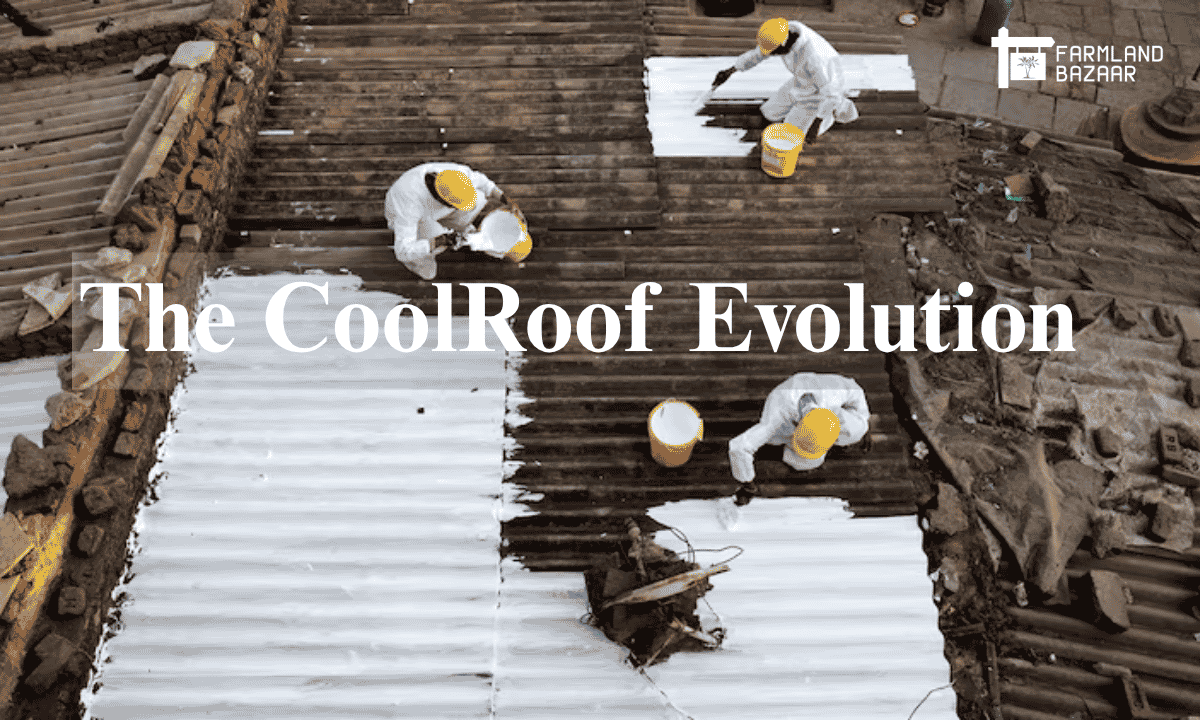
1. Reflective Surfaces: The first intervention was simple: make the roof reflect more sunlight. White lime wash, reflective coatings and light-coloured paints increase solar reflectance. Instead of absorbing the majority of solar radiation, the surface sends much of it back into the atmosphere. This immediately reduces surface heating.
It is a low-cost intervention, easy to apply, and especially useful for dense urban neighbourhoods where quick retrofits are possible.
2. Green Roofs and Modular Urban Farming: The second layer added living systems. Using shallow growing beds, modular planters, lightweight soil systems, and compact urban farming layouts, terraces were converted into green thermal buffers. This is where biology changes the thermal equation.
Plants cool through evapotranspiration, the process by which moisture released from leaves absorbs heat from the surrounding air. Unlike concrete, vegetation does not store large amounts of heat. Instead, it helps regulate microclimate. In effect, a roof that once trapped heat begins to dissipate it.
The result is more than shade. It is a rooftop that actively participates in cooling.
What the Numbers Show
Field observations from Ahmedabad’s cool roof initiatives have demonstrated measurable thermal improvements.
| Feature | Conventional Roof | Cool / Green Roof |
| Roof surface temperature | 55°C – 65°C | 30°C – 35°C |
| Indoor room temperature | Around 38°C | Around 31°C – 33°C |
| Cooling energy demand | Baseline | 20–30% lower |
| Night-time heat retention | High | Significantly reduced |
For residents, these numbers translate into very tangible benefits.
A drop of even 4–6 degrees indoors can mean the difference between an oppressive room and a livable one. It also means reduced dependence on fans and air-conditioners, especially during peak afternoon and evening hours.
This is important because thermal comfort is not merely a lifestyle issue. It affects health, sleep quality, concentration and household energy expenses.
Why the Rooftop Matters Beyond Temperature
The cool roof movement offers another important lesson: a rooftop can be productive land. Instead of functioning as an empty concrete slab, it can become a space that generates multiple forms of value.
Micro-Farming: Terraces can support herbs, tomatoes, gourds, leafy greens, chillies and medicinal plants. Even modest cultivation improves household food resilience and everyday engagement with living systems.
Longer Building Life: Reducing heat stress helps limit thermal expansion and contraction in exposed slabs. Over time, that can reduce surface deterioration and improve durability.
Air Quality Benefits: Vegetation helps trap dust, absorb carbon dioxide and improve local air quality; especially valuable in dense urban environments.
Urban Heat Island Reduction: If adopted at meaningful scale, cool roofs can reduce neighbourhood-level heat accumulation. Even a modest increase in reflective and vegetated surfaces across a district can soften the urban heat island effect.
In other words, rooftops can do much more than cover buildings. They can become environmental infrastructure.
A lesson for today and tomorrow
For owners and people interested in managed farmland and long-term land stewardship, Ahmedabad’s rooftop story carries a deeper lesson. For decades, land has largely been evaluated through location, square footage and appreciation potential. Those factors remain important. But climate pressures are changing how value is understood.
Increasingly, the most valuable land is not simply land that exists; it is land that performs, cools, produces, conserves and improves ecological resilience.
That is why the rooftop lesson matters far beyond the city. Whether it is a 500-square-foot terrace in Ahmedabad or a five-acre managed farmland outside Bengaluru, the principle remains the same: when land is designed to work with nature, it generates value beyond conventional returns.
For farmland buyers, this creates a powerful value proposition.
-
Climate Resilience: Green landscapes regulate heat naturally, improve moisture retention and support healthier microclimates.
-
Productive Utility: Managed farmland can generate produce, biodiversity value and long-term land productivity rather than remaining passive capital.
-
Lifestyle and Wellbeing: Access to green space increasingly contributes to healthier living, especially as cities become denser and hotter.
-
Long-Term Relevance: As climate risks rise, land that delivers ecological function may become more desirable than land that only promises appreciation.
Ahmedabad’s cool roof movement ultimately asks us to see rooftops not as leftover space, but as climate assets. And that may be the larger lesson for modern landowners: the future will belong to spaces that work with ecology rather than against it.
Whether you are managing a rooftop, a residential plot or a long-term farmland investment, the future will increasingly belong to spaces that work with ecology rather than against it. Before reaching for the air-conditioner this summer, it may be worth looking upward. The solution may already be above your head.
Written by Farmland Bazaar Team
Agricultural assets advisor contributing to Farmland Bazaar v2. Focusing on organic investments, soil analysis reports, and deed checks.