
Bengaluru On The Brink? New Study Warns Of Severe Water Shortage In 80 Wards By February 2025
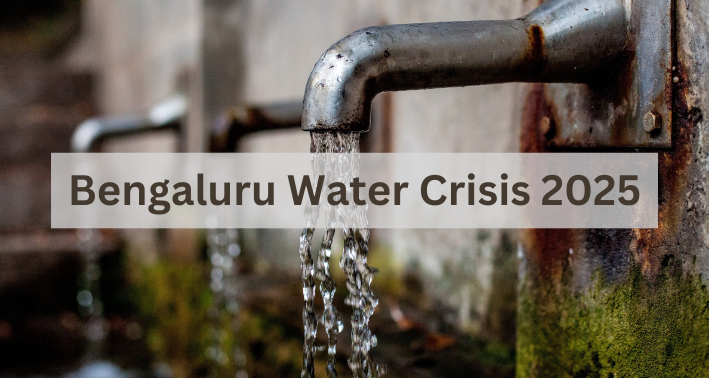
Bengaluru is confronting a significant water crisis, particularly in its peripheral regions such as Jakkur, Nagavara, Horamavu, Whitefield, and Bommanahalli are at the highest risk of severe water shortages.
A recent study by the Bangalore Water Supply and Sewerage Board (BWSSB) and the Indian Institute of Science (IISc) indicates that groundwater levels could decline by up to 25 meters in certain areas by mid-March 2025, potentially leaving many communities struggling to meet their daily water needs. The study highlights that Bengaluru currently uses about 800 million liters of groundwater daily. If sustainable solutions are not adopted, the situation will worsen.
The Alarming Situation
The study identified 80 wards, encompassing 110 villages, that rely heavily on groundwater and are at high risk of severe water shortages, especially during the upcoming summer months. The situation is more critical in the city's outskirts, where groundwater levels may drop by 20 to 25 meters, while central Bengaluru could see a decline of up to 5 meters.
V. Ram Prasath Manohar, Chairman of BWSSB, described the study as a "wake-up call" for the city, emphasizing the need for immediate action to prevent a full-blown crisis.
The Role of the Cauvery Water Supply Projects
To address the immediate water scarcity, the BWSSB has implemented the Cauvery Stage V project, which was inaugurated in October 2024. This project aims to supply an additional 775 million liters per day (MLD) to Bengaluru, focusing on the 110 villages that were merged into the Bruhat Bengaluru Mahanagara Palike (BBMP) in 2007. Prior to this phase, the city received 1,450 MLD, and with the completion of Stage V, the total supply has increased to 2,225 MLD.
Looking ahead, the Karnataka government has announced the Cauvery Stage VI project to ensure Bengaluru's future water needs. This phase is expected to bring an additional 500 MLD to the city, with a total project cost of ₹7,200 crore. The project includes the construction of nine new sewage treatment plants (STPs) with a combined capacity of 500 MLD to manage wastewater effectively.
Despite these advancements, many residents have not yet connected to the Cauvery water supply, even though pipelines are available. The BWSSB is urging citizens to transition from groundwater dependence to the Cauvery water system by paying the required connection fee, which can help reduce the strain on groundwater resources and provide a more stable water supply.
Sustainable Solutions: Replenishing Groundwater Levels
Bengaluru’s growing water crisis demands long-term sustainable strategies that focus on restoring and conserving groundwater. While projects like the Cauvery water supply initiative offer immediate relief, additional solutions must be implemented to ensure water security for future generations.
1. Rainwater Harvesting
Encouraging rainwater harvesting in both residential and commercial spaces can significantly contribute to groundwater recharge. Installing rooftop collection systems and percolation pits allows rainwater to seep into the ground, replenishing underground reservoirs. Government incentives and awareness campaigns can further promote the adoption of this method across urban and rural areas.
2. Reducing Paved Surfaces
The extensive use of concrete and asphalt in urban areas prevents water from naturally seeping into the soil. Increasing green cover and using permeable materials for roads and pavements can help improve groundwater recharge. Urban planning policies should prioritize eco-friendly infrastructure to create more sustainable water management systems.
3. Wastewater Treatment and Reuse
Reusing treated wastewater for landscaping, agriculture, and industrial purposes reduces dependency on fresh groundwater. Establishing decentralized sewage treatment plants in residential communities can aid in efficient water recycling. Implementing stringent water recycling regulations can ensure widespread adoption and reduce water wastage.
4. Afforestation and Agroforestry
Planting trees and adopting agroforestry practices improve soil moisture retention and enhance groundwater recharge. Forested areas act as natural water catchments, reducing surface runoff and promoting infiltration. Community-driven afforestation projects can further accelerate the restoration of depleted water sources.
5. Farmlands as a Groundwater Recharge Solution
Farmlands play a crucial role in replenishing groundwater by allowing rainwater to percolate naturally. Unlike urban areas dominated by concrete structures, farmland preserves soil porosity, aiding in water infiltration. For instance, Aranyakaa Farms’ H2O project incorporates advanced rainwater harvesting techniques and sustainable water management practices, showcasing how farmland development can contribute to long-term water conservation.
By implementing these strategies, Bengaluru can take significant steps towards sustainable water management, ensuring that groundwater levels are restored and maintained for the future.
Practical Steps to Restore Bengaluru’s Groundwater Levels
1. Rainwater Harvesting
-
Mandate rainwater harvesting systems in all new buildings and encourage retrofitting in older constructions.
-
Provide subsidies and tax benefits for households and businesses that install rainwater harvesting systems.
-
Conduct awareness campaigns on the benefits and implementation of rainwater harvesting.
-
Establish community-based rainwater harvesting projects in parks and open spaces.
2. Reducing Paved Surfaces
-
Introduce policies promoting the use of porous materials for pavements, driveways, and roads.
-
Increase green zones in urban planning, incorporating parks, urban forests, and green roofs.
-
Implement zoning laws that encourage developers to include more green spaces in new projects.
-
Offer incentives for homeowners and businesses to replace concrete areas with permeable alternatives like grass pavers.
3. Wastewater Treatment and Reuse
-
Set up decentralized wastewater treatment plants in residential and commercial areas.
-
Enforce stricter water recycling regulations for industries and large residential complexes.
-
Promote the use of treated wastewater for non-potable applications like irrigation, landscaping, and construction.
-
Encourage RWAs (Resident Welfare Associations) to install greywater recycling systems in apartment complexes.
4. Afforestation and Agroforestry
-
Launch large-scale tree plantation drives in urban and semi-urban areas.
-
Provide incentives to farmers to adopt agroforestry practices, integrating trees with agricultural crops.
-
Protect and restore existing green cover by preventing deforestation and encroachments.
-
Engage local communities, NGOs, and schools in afforestation efforts to create a culture of conservation.
5. Farmlands as a Groundwater Recharge Solution
-
Promote sustainable farmland projects that integrate rainwater harvesting and recharge pits.
-
Encourage farmland owners to adopt organic and regenerative farming techniques to improve soil moisture retention.
-
Provide government support for farmland conservation projects and eco-friendly agricultural practices.
-
Develop community-driven farmland models where urban residents can participate in sustainable farming and groundwater conservation efforts.
Investing in Sustainable Farmland Near Bangalore
With water scarcity becoming a growing concern, many are exploring alternative living solutions. Investing in farmland near Bangalore offers a peaceful, eco-friendly lifestyle while contributing to long-term sustainability. Properties that focus on water conservation and green living are gaining popularity, making them a smart investment for those seeking a secure future.
To find your ideal farmland in Bangalore, utilizing online platforms like Farmlandbazaar.com can be highly effective. As India's first marketplace dedicated to farmlands, farmhouses, coffee estates, and agricultural lands, Farmland Bazaar offers a streamlined experience for buyers and sellers through both mobile and laptop. To refine your search, you can enter specific keywords such as “Farmland for sale near me,” “Farmland for sale Bangalore,” “Farmland near Bangalore,” “farms for sale,” or “farms for sale near me.” Applying filters on the website further enhances your search experience, allowing you to sort results by various criteria such as location, price range, and property type, making the search process more efficient and tailored to your preferences.
A Call for Change
Bengaluru’s water crisis is an urgent issue that requires both immediate action and long-term sustainable solutions. While the Cauvery V Stage Project will provide relief in the short term, farmland developments and sustainable water management strategies offer a way forward to prevent future crises. Encouraging a balance between urban expansion and rural sustainability can help Bengaluru secure its water future while promoting eco-friendly living.
By investing in sustainable farmland near Bangalore for sale, individuals can contribute to groundwater replenishment, environmental conservation, and a more self-sufficient way of life. Solutions like rainwater harvesting, afforestation, and groundwater recharge are crucial in shaping a water-secure and greener future for generations to come.
Written by Farmland Bazaar Team
Agricultural assets advisor contributing to Farmland Bazaar v2. Focusing on organic investments, soil analysis reports, and deed checks.