
How One Engineer Is Saving 200 Acres of Nilgiris’ Ancient Shola Forests
The Nilgiris, also known as the "Blue Mountains," are one of the most beautiful and ecologically significant landscapes in India. Located in Tamil Nadu and part of the Western Ghats, this region is a biodiversity hotspot and a UNESCO World Heritage Site. Spread across 5,000 square kilometers, the Nilgiris are home to pristine Shola forests, sprawling grasslands, and rolling tea plantations. They’ve also served as the backdrop for iconic Indian films like Sadma (1983), Dil Se (1998), and Barfi (2012).
However, the enchanting beauty of the Nilgiris hides a grim reality: centuries of ecological degradation. The arrival of the British during colonial rule marked a turning point for this fragile ecosystem. What once was a land dominated by grasslands and Shola forests was transformed into tea estates, wattle plantations, and eucalyptus forests. These changes not only displaced native vegetation but also disrupted the balance of the ecosystem, causing long-term environmental damage.
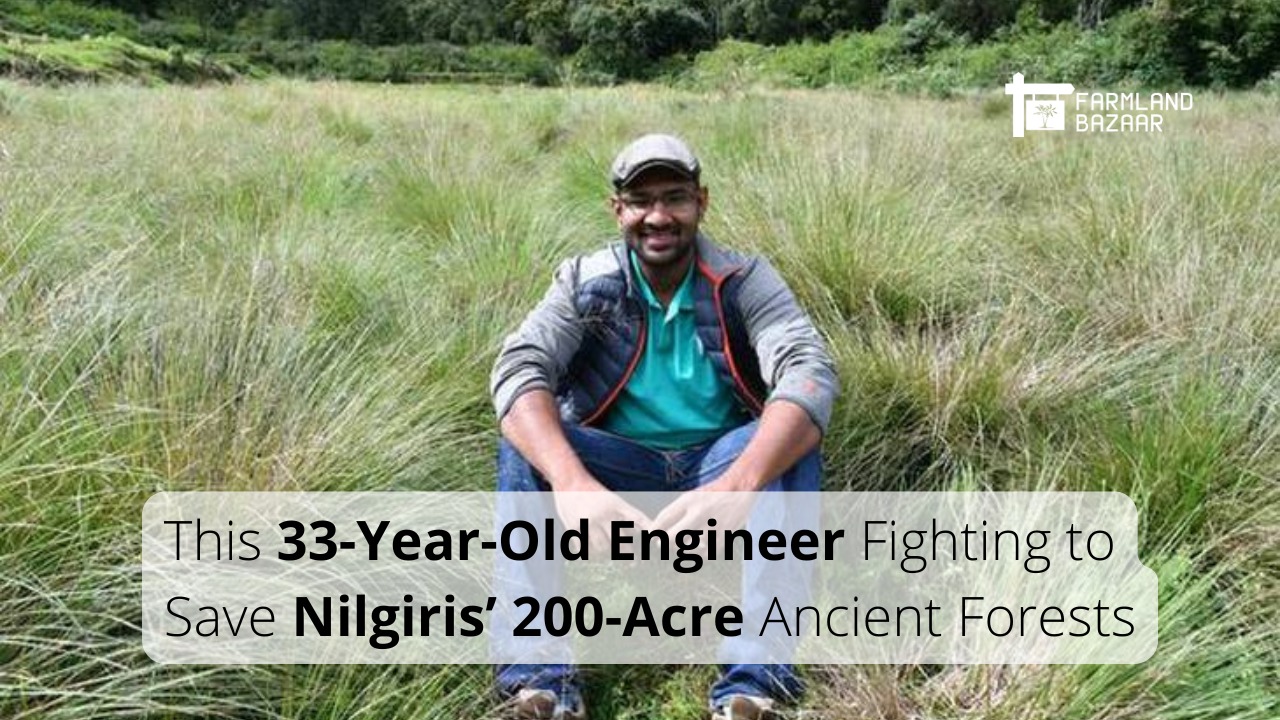
In this challenging scenario, a young engineer decided to take a stand. Godwin Vasanth Bosco, a 33-year-old environmental engineer from Tamil Nadu, has dedicated nearly a decade to reversing the damage done to the Nilgiris. After studying and working in Finland, he returned to his homeland in 2009 with a mission to restore the plateau’s original glory. “This land has given me everything — a home, a childhood surrounded by nature, and a sense of belonging. It was time for me to give back,” says Bosco.
A Childhood Rooted in Nature
Bosco’s passion for the environment began early in life. Growing up in the Nilgiris, he lived in a home surrounded by lush greenery and studied at a school with trees, ponds, and other natural features. This intimate connection with nature shaped his worldview and inspired him to work toward conservation.
After completing his education, Bosco worked in Finland’s alternative technology sector. While the job was fulfilling, his heart remained in the Nilgiris. Observing the ecological crisis unfolding in his homeland, he decided to return and focus on restoration efforts.
In 2009, Bosco underwent a training program at the Gurukula Botanical Sanctuary in Wayanad, where he gained hands-on experience in ecology and biodiversity conservation. This experience proved to be the turning point in his journey to save the Nilgiris. “It was there that I realized the importance of grassroots efforts and how even small actions could lead to meaningful change,” he shares.
The Transformation of the Nilgiris: From Grasslands to Tea Estates
Before the British arrived, the Nilgiris were primarily grasslands and Shola forests, forming a harmonious ecosystem. The grasslands played a critical role in holding the soil together, maintaining clean water, and regulating the flow of streams and rivers. They also provided fodder for herbivores, supporting a wide variety of wildlife.
However, colonial practices changed all that. Tea estates and plantations of eucalyptus, wattle, and pine were introduced to make the land profitable. These invasive species spread rapidly, overpowering native vegetation. Over time, this transformation led to a host of environmental problems, including:
-
Loss of Grasslands and Native Forests: Nearly 70% of the grasslands were overtaken by invasive species.
-
Depletion of Water Resources: The natural hydrology of the region was disrupted, leading to reduced groundwater levels and water shortages.
-
Man-Animal Conflicts: As habitats shrank, wildlife began encroaching on human settlements.
-
Landslides and Soil Erosion: Without grasslands to hold the soil in place, the region became more prone to landslides during heavy rains.
“Before colonization, the Nilgiri grasslands acted as the guardians of the ecosystem, holding the soil together, maintaining water purity, and supporting life. These roles have been almost completely lost, but they can be reclaimed,” Bosco explains.
Building Upstream Ecology: Bosco’s Restoration Journey
In 2013, Bosco established Upstream Ecology, an organization dedicated to restoring the Nilgiris’ grasslands and Shola forests. His work involves growing native species in his nursery and replanting them in degraded areas. Each project starts with a detailed baseline study of the soil, landscape, topography, and water conditions to determine the most suitable species for the area.
His nursery in Udhagamandalam (Ooty) grows over 90 native species, including rare and endangered grasses like Chrysopogon nodulibarbis, Themeda tremula, and Zenkeria elegans. Shola trees and shrubs, such as balsams and Strobilanthes, are also nurtured.
The restoration process is meticulous:
1. Establishing a Basal Layer: Bosco plants native tussock grasses, which form the foundation for the ecosystem.
2. Introducing Native Shrubs and Trees: Once the grass layer stabilizes, other plants are introduced to create a balanced habitat.
3. Ongoing Monitoring: Every patch of land is monitored for a year, with weeds and invasive species regularly removed.
“We don’t just plant trees or grasses. We work to restore an entire ecosystem. It’s a slow, ongoing process that requires patience and commitment,” he says.
The Importance of Shola Forests and Grasslands
Shola forests are unique tropical montane forests found only in South India and Sri Lanka. They play a vital role in maintaining the region’s water systems, drawing moisture from mist and clouds. These forests act as natural reservoirs, storing rainwater during the monsoon and releasing it steadily throughout the year.
Bosco highlights the importance of grasslands in this ecosystem. “A large clump of tussock grass, which can be several hundred years old, is capable of storing more carbon than a single tree,” he points out. Healthy Shola-grassland mosaics also ensure that streams and rivers originating from the region remain perennial.
Supporting Local Communities and Wildlife
The Nilgiris are home to the Toda tribe, an indigenous community with a deep cultural and spiritual connection to the land. The Todas use native grasses like Eriochrysis rangacharii to build their temples and huts. However, habitat destruction has brought these grasses to the brink of extinction. Bosco’s nursery has successfully regrown these grasses, helping preserve the Toda way of life.
“Restoring native species is not just about biodiversity; it’s about preserving a culture and its connection to the land,” Bosco emphasizes.
In addition to cultural preservation, Bosco is working with local farmers to promote sustainable practices. For example, in the Yedapalli region near Coonoor, Bosco collaborated with the Clean Coonoor NGO to plant native grasses. This helped restore the natural watershed, leading to clearer water and increased groundwater levels.
Challenges in Restoration
Restoring the Nilgiris has not been easy. Bosco has faced countless challenges, from navigating the complexities of the landscape to dealing with invasive species. There were moments when he felt overwhelmed and considered giving up.
“I’ve spent countless hours walking these lands, documenting their changes, and trying to understand their secrets. There were times when I thought I was at a dead end, but the landscape always had more to teach,” he shares.
His findings were compiled into a book, Voice of a Sentient Highland, published in 2019. The book tells the story of the Nilgiris, revealing the ecological damage caused by colonial practices and offering insights into restoration.
The Science Behind the Nilgiris’ Elevation
Even after publishing his book, Bosco continued his research. He discovered that the Nilgiris’ elevation is linked to geological events from millions of years ago. “The Nilgiris rose to their current height 2.5 billion years ago, with another significant elevation 90 million years ago during the formation of the Himalayas,” he explains.
These findings were so significant that Bosco revised parts of his book and republished it.
A Vision for the Future
“Restoration is not about planting a garden; it’s about bringing back the functions of a habitat,” Bosco says.
With ongoing support from government agencies, NGOs, and local communities, Bosco’s vision for the Nilgiris is slowly becoming a reality. He hopes to involve more farmers in cultivating native species, creating a sustainable model for biodiversity restoration.
For Bosco, restoring the Nilgiris is about more than just planting trees. It’s about reviving an entire ecosystem, preserving cultural heritage, and ensuring a sustainable future. His story is a testament to the power of perseverance and the impact one person can have on the environment.
Written by Farmland Bazaar Team
Agricultural assets advisor contributing to Farmland Bazaar v2. Focusing on organic investments, soil analysis reports, and deed checks.