
Sonu Nigam’s ₹1.95 Cr Raigad Farmland Sale Fuels India’s Land Boom
In the world of Indian real estate, a new trend is ripening. While luxury apartments and commercial offices have long been the "go-to" for investors, agricultural land is quickly becoming the crown jewel of high-return portfolios. The latest headline-grabbing move in this sector comes from one of India’s most iconic voices, Sonu Nigam.
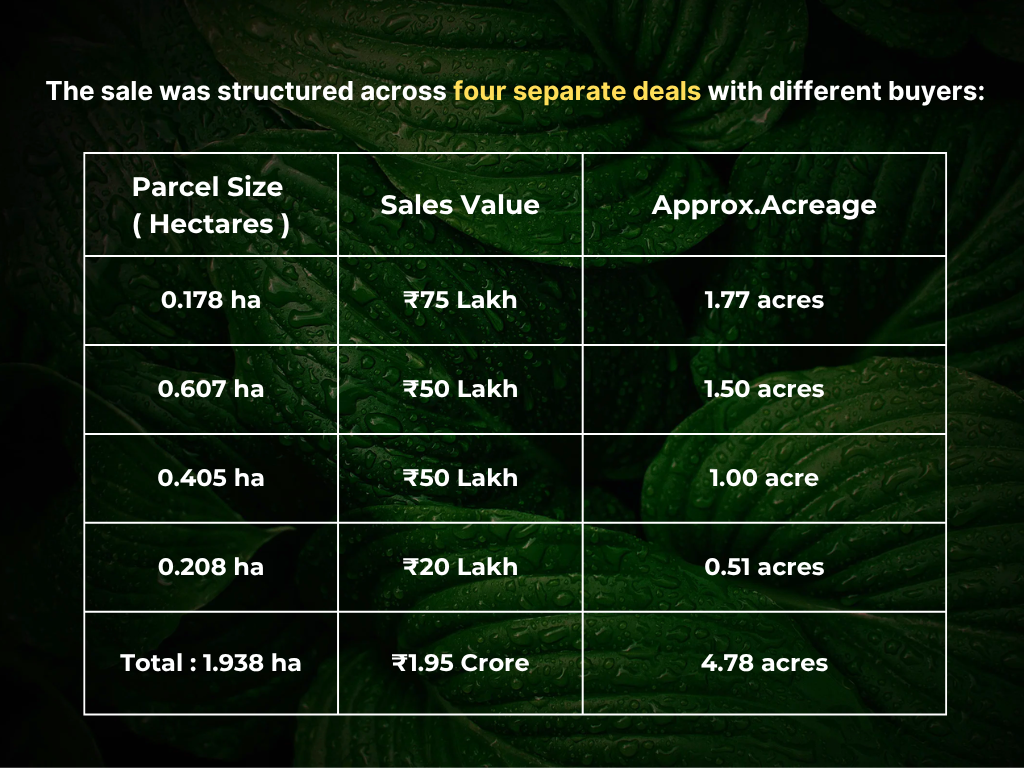
The legendary playback singer recently offloaded nearly 4.8 acres of agricultural land in the Raigad district of Maharashtra. The total deal, valued at ₹1.95 crore, was executed through four separate transactions. While celebrity property deals are common, this specific sale offers a masterclass in why agricultural land is the new frontier for wealth creation in India.
Deal Breakdown & Financials
The transactions were finalized and registered on April 7, 2026. Sonu Nigam sold a combined land area of over 1.9 hectares (approx. 4.7 acres) for a total consideration of ₹1.95 crore.
Stamp Duty: A total stamp duty of ₹11.70 lakh was paid for these registrations.
Location: The land is situated in Savele Village, located in the Karjat taluka of Raigad district
Strategic Insight: Why the Raigad Deal Matters
This transaction is more than a celebrity exit; it signals a structural shift in Indian real estate. As our cities reach urban exhaustion, investors are gravitating toward agro-realty—a sophisticated asset class where nature and capital appreciation intersect.
-
The Third Mumbai Paradigm
The Atal Setu (MTHL) and the Navi Mumbai International Airport have redrawn the map. These milestones have integrated peripheral regions like Karjat into the mainstream urban economy, transforming weekend retreats into high-velocity investment corridors. For the astute investor, this represents a rare early-entry window into a vital extension of the Mumbai-Pune wealth corridor.
-
Redefining Liquidity
The most telling aspect of this deal is its execution. Transacting nearly 5 acres in a single day across four distinct buyers proves that agricultural land is no longer a frozen asset. This level of liquidity highlights:
-
Retail Demand: A surging appetite for smaller, ticket-sized parcels.
-
Market Depth: A liquid secondary market where well-located land is absorbed almost instantly.
-
The Premium Return Profile
The valuation of managed farmland is now driven by a new luxury: Wellness. The premium on biophilic living and regenerative agro-forestry has added a layer of value that traditional real estate cannot match. Investors are no longer just buying land; they are securing scarce, carbon-positive assets that offer a hedge against inflation and a sanctuary for the future.
In this new era, the return on investment is measured by both permanence and prestige.
Why the Demand is Growing Across India
There are three key reasons why farmland is attracting strong interest:
1. Limited Supply
Land is a finite resource. As cities expand, areas located 50 to 90 minutes away from urban centres are seeing strong growth. Early investment in these zones can lead to significant appreciation over time.
2. Shift Toward Nature-Led Living
After the pandemic, there has been a clear shift toward open, green spaces. Many buyers, especially high-net-worth individuals, are looking for homes that offer better air quality, privacy, and a connection to nature. Locations like Karjat fit well into this demand.
3. Tax Efficiency and Yield Potential
Agricultural income in India can offer tax advantages under certain conditions. Additionally, well-managed farmland can generate income through crops, plantations, or agro-based activities, adding to overall returns.
What This Means for the Everyday Investor
The Sonu Nigam deal proves that agricultural land has become a liquid and structured asset. The fact that 4.8 acres could be sold in a single day via four different deals shows that there is a hungry market for these plots.
For the modern investor, the message is clear: You don't need to be a farmer to own a farm. You just need to be a visionary. Whether it is for a second home, a legacy for your children, or a pure investment play, the earth is providing returns that few other assets can match.
Conclusion
The Raigad transaction highlights how farmland is gradually becoming a mainstream real estate asset. With better infrastructure, rising demand in peripheral regions, and improving market transparency, the segment is gaining strong momentum.
At Farmlandbazaar, we continue to track these trends, helping investors understand and access one of the most grounded and evolving opportunities in real estate.
Written by Farmland Bazaar Team
Agricultural assets advisor contributing to Farmland Bazaar v2. Focusing on organic investments, soil analysis reports, and deed checks.