
How One Farmer Turned 4,000 Discarded Aloe Vera Plants into a ₹3.5 Crore Business
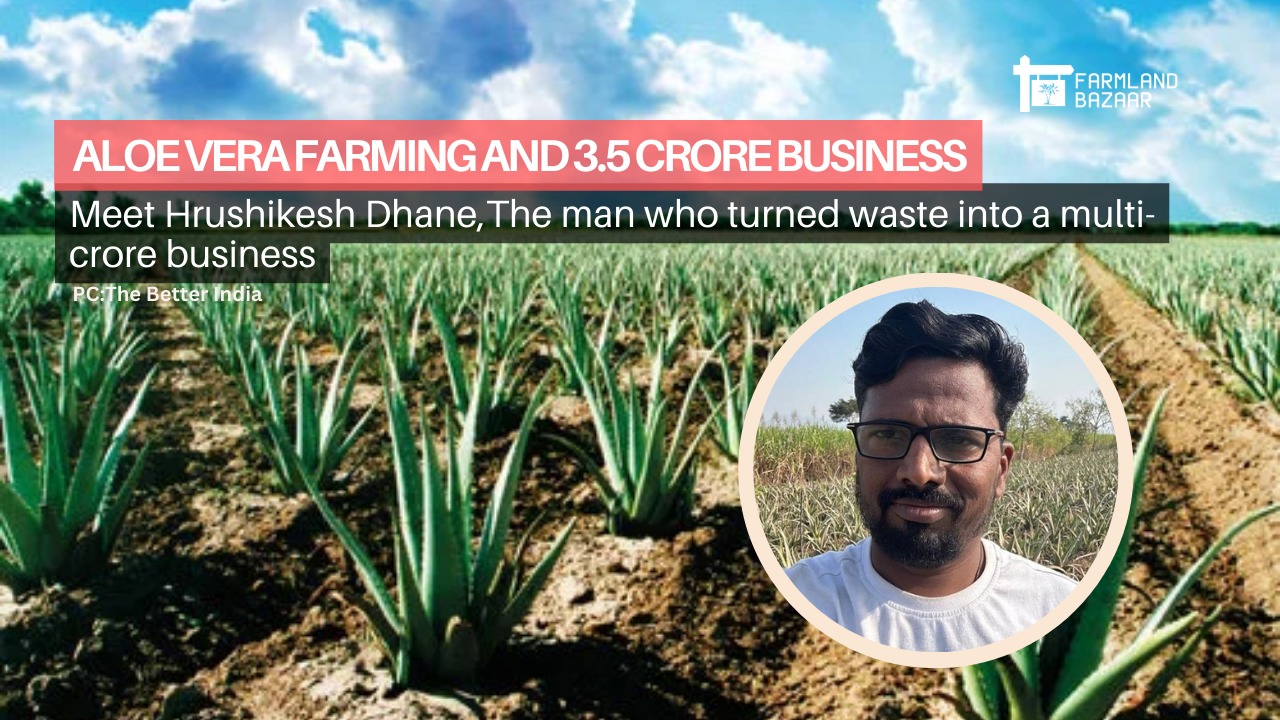
In the small village of Padali in Satara district of Maharashtra, farming was never easy. Reasons included dry land, scarce money and very limited opportunities. Like everyone, this young boy also believed and grew up dependent on traditional crops, earning just enough to survive.
His name was Hrushikesh Dhane. Today, the same boy runs a successful aloe vera business earning around ₹3.5 crore a year. What makes his journey remarkable and worthy to read is not just the money he earns, but how it all started with plants that people had thrown away on the roadside.
Let us take you through the story of how Hrushikesh Dhane turned waste into a multi-crore business.
A Childhood without Slippers
Hrushikesh Dhane did not grow up with comfort. His family lived in a small mud house with a bare monthly income of ₹2,000. The food was simple like sorghum chapatis. And vegetables were not always affordable. Even basic things were a luxury.
“I didn't even own a pair of slippers until I was in Class 10,” Hrushikesh once recalled.
Like many young people from rural India, he wanted to support his family as soon as possible. After finishing his studies, he took a marketing job that paid ₹3,500 a month. But the job came with a condition which was to move about 25 kilometres away from his village. And when he calculated the cost of rent, food, travel etc, he realized it would be impossible to survive in the city on that salary. So Hrushikesh made a bold decision. Instead of chasing a small salary in a city, he decided to return to farming in his village.
But he wanted to do it differently.
The Aloe Vera Scam That Changed His Life
In 2007, a local conman tricked villagers into planting aloe vera, promising they would become rich. When the man disappeared, angry farmers uprooted the plants and threw them on the road.
Hrushikesh did something crazy. He collected 4,000 of those discarded plants and brought them to his farm. His neighbors laughed. His in-laws were even more worried.
"When I started, people told me that planting thorny plants would bring bad luck to the house," says Hrushikesh.
But he had a degree in horticulture and knew better. He planted them between his mango trees, hoping the bitter plants would at least keep the termites away.
A Smart Discovery
As the aloe vera plants grew, Hrushikesh began observing them closely. He noticed something interesting. Animals and insects did not like the bitter taste of aloe vera. The plant naturally protected itself from pests.
This gave him an idea. He experimented by mixing aloe vera pulp with fish oil and created a natural pesticide. The mixture worked surprisingly well and helped protect crops without using chemical sprays.
But that was not his only innovation. Farmers often face a problem when spraying medicine on banana leaves. The water simply rolls off the leaf surface. Hrushikesh created another solution; an aloe-based spreader that helps liquids stick to leaves. This small innovation made spraying far more effective. Farmers began showing interest in his product.
Slowly, Hrushikesh realised that aloe vera could be more than just a plant. It could be a business.
Moving Beyond Farming
Instead of only selling raw aloe vera leaves, Hrushikesh started thinking about value addition. He began processing aloe vera into different products. Soon he was making aloe vera juice, herbal soaps, shampoos and gels.
What started as a small farming experiment slowly grew into a full-scale business. Today, Hrushikesh runs a processing unit and sells multiple aloe-based products. His business runs on three main income streams.
-
Raw Aloe Leaves: He supplies fresh leaves to pharmaceutical and cosmetic companies in cities like Mumbai and Pune. This provides steady income.
-
Agricultural Products: His aloe-based pesticides and spreaders are used by farmers who prefer organic farming solutions.
-
Personal Care Products: Aloe vera juices, gels and herbal soaps bring the highest profit margins.
By combining farming with processing and product innovation, Hrushikesh built a strong and sustainable business model.
From Barefoot to Fortuner
The man who once walked barefoot now drives a Toyota Fortuner. He replaced his mud hut with a beautiful two-storey house. He proved that farming can be a profitable and modern business.
He also created employment in his village and inspired many farmers to look at agriculture differently.
“Back then, we lived in a kachha house,” he says.
“Today, my parents use aloe vera from our farm for their hair and health. Those thorny plants did not bring bad luck. They changed our life.”
Lessons from Hrushikesh Dhane’s Journey
Hrushikesh’s story offers powerful lessons for young farmers and entrepreneurs.
1. Look for opportunity where others see problems: Most people throw away what they do not understand. Hrushikesh picked up discarded plants from the road and turned them into a big business by seeing value where others saw waste.
2. Don’t Just Sell, Make Something: Selling raw crops like leaves or grains earns very little money. You make much higher profits when you turn those crops into finished products like juices, gels, or bottled oils.
3. Solve a Neighbor’s Problem: Real success comes from helping others. Hrushikesh made a special spray that helped other farmers protect their crops from insects, which created a completely new and steady stream of income.
4. Grow What People Want: Do not just grow what your ancestors grew. Look at what big companies and city markets are actually asking for today. Growing high-demand medicinal plants can be much more profitable.
5. Think Like a Businessman: Farming is not just about digging soil; it is a professional career. You can earn more than a corporate job from a small piece of land if you focus on branding.
Stories like Hrushikesh Dhane’s are changing how people look at agriculture in India. For decades, farming was seen as a difficult profession with low income. But innovative farmers are proving that agriculture can also create strong businesses. Sometimes, success does not start with big investment or perfect conditions but with a simple decision. Like picking up plants that everyone else had thrown away.
Written by Farmland Bazaar Team
Agricultural assets advisor contributing to Farmland Bazaar v2. Focusing on organic investments, soil analysis reports, and deed checks.