
From Highways to Healing Forests: How NHAI’s Arogya Van is Redefining Land Value in Modern India
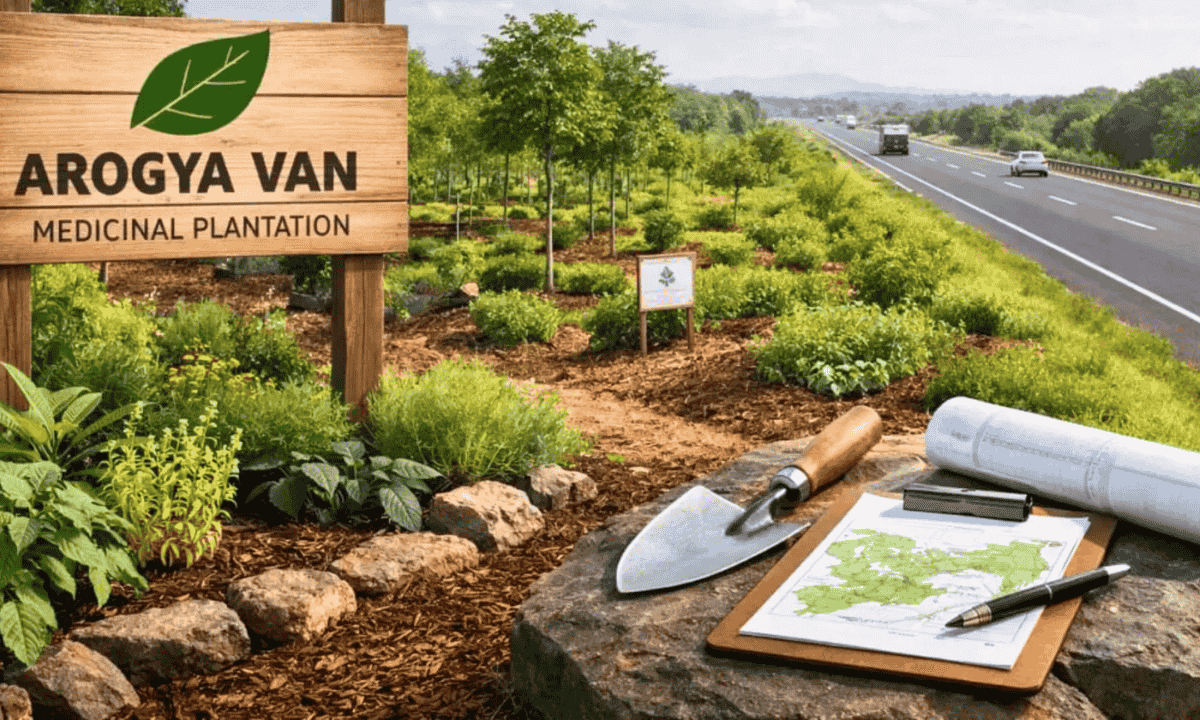
The road to the future is turning greener—and healthier. In a move that reflects the growing relevance of nature-led development, the National Highways Authority of India has launched Arogya Van, an initiative aimed at transforming vacant land along highways into medicinal forests.
This is not just a plantation drive. It signals a deeper shift in how land is being understood and valued in India. At a time when managed farmland and regenerative land use are gaining traction, this initiative reinforces the idea that land can deliver both ecological and economic value when used thoughtfully.
I. A Living Pharmacy on the Roadside
For decades, roadside plantations were largely functional, with basic trees planted for shade or beautification. Arogya Van changes this approach by treating land as a living, productive ecosystem.
Under this initiative, NHAI is introducing over 36 varieties of medicinal and native plants, carefully selected for their ecological benefits and adaptability to different regions. These plantations are being developed across multiple states, aligned with local climate and soil conditions.
Travelers on highways will now encounter stretches filled with neem, known for its natural healing properties; amla, valued for its nutritional benefits; and arjun, often associated with heart health. Other species such as jamun, tamarind, maulsari, and gular add both ecological diversity and functional value.
For farmland investors, this offers a practical blueprint. A piece of land is no longer just a passive holding. With the right planning, even a 5 to 10 acre plot can evolve into a productive, multi-layered ecosystem that supports both wellness and long-term value creation.
II. Creating Bio-Hotspots: The Pollinator Effect
One of the most important outcomes of Arogya Van is its impact on surrounding ecosystems, especially agriculture. By planting flowering and fruit-bearing species, these zones naturally attract pollinators such as bees and butterflies.
These pollinators play a critical role in improving crop productivity in nearby farmlands. As their population increases, the overall health of the agricultural ecosystem improves.
At the same time, fruit-bearing trees attract birds, which help in natural pest control. This reduces the need for chemical inputs and supports more sustainable farming practices.
For managed farmland owners located near these highways, Arogya Van acts as a natural extension of their ecosystem. It contributes to better soil quality, improved biodiversity, and a healthier growing environment without direct intervention.
III. Strategic Placement: Nature Meets Utility
The success of this initiative lies in its thoughtful execution. NHAI is not planting randomly but focusing on high-impact zones where environmental benefits can be maximised.
Plantations are being developed near toll plazas, interchanges, cloverleaf junctions, highway medians, and wayside amenities. These are areas that typically experience high traffic, pollution, and heat.
By introducing dense greenery in these spaces, the initiative helps reduce air pollution, absorb noise, and lower surface temperatures. This improves the overall travel experience while also contributing to environmental health.
Wayside amenities are also being reimagined. Instead of standard rest stops, travelers may now experience green spaces where they can walk through shaded groves or sit amidst natural surroundings. This adds a wellness dimension to highway infrastructure.
Large junctions and loops, often dominated by concrete, are being converted into micro-forests. These spaces act as cooling zones and help counter the urban heat island effect commonly seen in high-traffic corridors.
IV. The Shift Toward Thematic Land Assets
What NHAI is implementing at a national level reflects a broader shift in how land is being developed and valued. The focus is moving from single-use or monoculture plantations to more diverse, functional landscapes.
The idea of thematic land assets is gaining importance. Instead of planting one type of crop or tree, landowners are now looking at mixed plantations that offer ecological, aesthetic, and economic benefits.
This approach aligns closely with the philosophy of regenerative land use, where the goal is not just to extract value but to enhance the land over time.
With an additional 188 hectares already identified for future plantation, the Arogya Van initiative is set to scale significantly. As more zones are developed, the cumulative impact on biodiversity, climate resilience, and land value will become even more visible.
Over time, these green corridors could influence how nearby land is perceived. Areas close to such developments may see increased interest from buyers looking for cleaner environments and nature-led living.
The Takeaway
Whether you are driving to your weekend farm or exploring land investment opportunities, Arogya Van offers a new perspective on value. It shows that land is most valuable when it is healthy, diverse, and connected to its natural ecosystem.
For the growing community of farmland investors, this initiative serves as a strong validation of nature-first thinking. It demonstrates how thoughtful land use can create long-term benefits that go beyond financial returns.
At Farmlandbazaar, we see this as more than a government initiative. It is a shift in mindset. A reminder that the future of real estate lies not just in development, but in regeneration.
Written by Farmland Bazaar Team
Agricultural assets advisor contributing to Farmland Bazaar v2. Focusing on organic investments, soil analysis reports, and deed checks.