
Selling Air? How Odisha’s Farmers Are Pioneering India’s Carbon-Credit Revolution
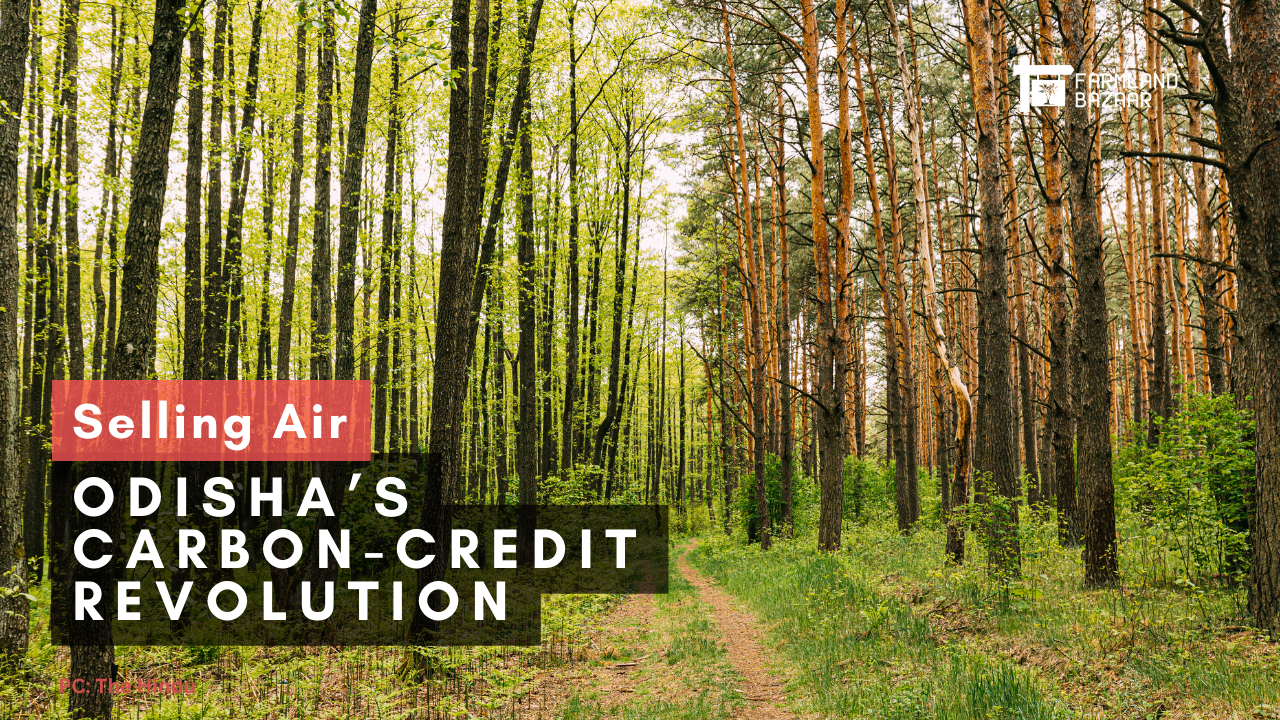
When you hear about carbon credits, you probably think of big factories or international treaties. But in the villages of Odisha, this complex idea is turning into something simple and real: a way for small farmers to earn money just by changing or we must say evolving and improvising how they farm and what they plant.
In short, the state has two big ideas happening at once. One is about planting trees, and the other is about smarter rice farming. Both aim to bring money from the global climate economy directly into the hands of rural families.
Odisha is rewriting the climate story, turning forest slopes and paddy fields into surprising new sources of income for small farmers.
The First Shift
The first big shift is happening in the hilly, forest-rich belts of Southern Odisha at places like Ganjam, Gajapati, Kalahandi and Kandhamal. Here, the non-profit Gram Vikas is working with 6,000 Adivasi small farmers on something that sounded unbelievable in the beginning, which is generating income by planting trees. For farmers who’ve lived off the land for generations, the idea felt almost funny.
“How can anyone earn money by selling air?” wondered a farmer from Puriasahi.
But that “air” he talked about was actually carbon , the carbon stored by the trees and soil on their own farms. And today, that impossible idea is slowly turning into real income.
How it Works (The Agroforestry Model)
-
The Action: Farmers plant 15 million saplings on their degraded land, essentially restoring 3,561 hectares of forest area.
-
The Climate Goal: These trees suck carbon dioxide out of the air and store it. This process is called carbon sequestration.
-
The Reward: Under a global standard called Plan Vivo, this stored carbon is measured and sold as carbon credits. The income from these credits goes back to the farmers.
The payments are long-term and designed to provide a stable, recurring income for 30 years just for maintaining the plantations! Also the land and trees remain 100% with the farmer. So farmer's asset earning income for 30 years.
The Second Shift
While trees are taking root in the south, a completely different kind of carbon farming is starting in the big rice belts of western Odisha at places like Sambalpur, Bargarh and Subarnapur. These regions feed millions, but rice paddies also release a lot of methane because they stay flooded for long periods. Methane is a strong greenhouse gas and reducing it is a big challenge.
To fix this, the Odisha government teamed up with agricultural experts from ICRISAT. Together, they launched the CSIFRA project, a programme that helps farmers earn carbon credits by shifting to smarter, more climate-friendly rice-growing methods.
How it Works (The Regenerative Farming Model)
Instead of planting trees, this model focuses on changing how rice is grown to reduce emissions and enrich the soil:
-
Switching Techniques: Farmers use methods like Direct-Seeded Rice (DSR) and Alternate Wetting and Drying (AWD). These practices keep the fields from being constantly flooded, which dramatically cuts down methane emissions.
-
Soil Health: They also focus on managing crop residue (not burning it) and using green manuring, which increases soil organic matter (carbon stored in the ground).
-
The Payoff: Scientists are directly measuring the reduction in greenhouse gases from these fields. Farmers who adopt these climate-friendly practices will earn annual incentives based on how much they reduce emissions.
Farmers are already seeing results:
"Water use dropped by 30% and yield increased by 5%. I also earned extra income by selling crop residue instead of burning it." says a farmer in Sambalpur.
Two Paths, One Future: Odisha as India’s Pioneer
Odisha is special because it's tackling the climate economy from two sides at once: the community-led voluntary market (trees) and the state-backed, scientifically-measured market (paddy).
This dual approach is creating a blueprint for the rest of India on how to make climate action profitable for the smallholder farmer. By creating a new digital MRV system (Measurement, Reporting and Validation), ICRISAT is making sure that even a farmer with one acre can easily participate and get their fair share of the carbon income.
What started as "selling air" is fast becoming a new, practical livelihood pathway, proving that restoring the climate and increasing rural prosperity can go hand-in-hand.

The Bottom Line for Farmland Owners and Developers
Odisha's dual carbon initiatives offer a clear, strategic blueprint for monetizing sustainable land management. Climate action is no longer just a cost; it's a revenue-generating asset.
1. New Carbon Revenue Streams
Farmland owners can now earn from verified carbon offsets in addition to crops:
-
For Crop Farms (Paddy, etc.): Switching to climate-friendly methods such as Direct Seeded Rice (DSR) or Alternate Wetting and Drying (AWD) can cut methane. The ICRISAT project shows these changes will soon earn verified, tradable carbon credits.
-
For Development/Farmhouse Land: Integrate agroforestry/tree planting (the Gram Vikas model) on degraded sections for a stable, long-term revenue stream via Plan Vivo-certified carbon sequestration.
2. Enhanced Asset Value and Resilience
Adopting carbon-certified practices dramatically improves the land's intrinsic value:
-
Financial Advantage: When the soil has more organic carbon it becomes healthier. That means better crop yields and fewer expenses because the land needs less fertilizer and less water.
-
De-risking Investment: Carbon certification works like a trusted stamp of approval. It shows that the land is more resilient to drought, erosion and climate stress. This makes the land safer to invest in and often more valuable.
This is the moment to move beyond traditional farming and development models. We at FarmlandBazaar are dedicated to bringing you continuous updates on how to leverage these carbon market innovations. Seize this opportunity now to transform your property into a Climate-Smart Asset, ensuring both ecological integrity and lasting financial prosperity.
Stay tuned to FarmlandBazaar for the latest news, guides and investment insights on India's rapidly expanding carbon credit economy!
Written by Farmland Bazaar Team
Agricultural assets advisor contributing to Farmland Bazaar v2. Focusing on organic investments, soil analysis reports, and deed checks.