
The Perpetual Cycle of Demolition and Rebuilding in Raisina, Gurugram is not letting her Heal
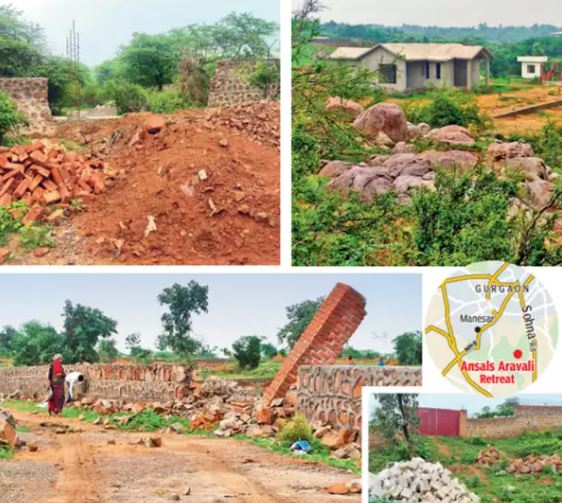
Within just two weeks of the district administration's demolition of illegal farmhouses in Ansals Aravali Retreat, Raisina, rebuilding efforts are already underway. An inspection by the Times of India (TOI) has revealed that not only are the demolished buildings being reconstructed, but additional protected areas are also being developed with new roads and electricity poles, indicating a swift return to the previous state.
Persistent Building Activity Despite Restrictions
On a lane beginning at farmhouse number C-117, new concrete structures have quickly emerged, with further construction imminent. Local reports confirm that this cycle of demolition followed by rebuilding is a recurring issue. Bholu, a security guard, observed, "Farmhouses that were demolished previously have been rebuilt, and those removed just 15 days ago are also under reconstruction." Currently, construction is active at 12 plots, including the drilling of several borewells and road construction.
Impact on Local Economy and Environment
Despite ongoing legal disputes, Raisina’s picturesque environment continues to drive land prices upward. Local resident Pradeep Singh noted, "This cycle of demolition and repair is common. After every demolition, new construction starts, leading to a general indifference among people." Gokul, another local, remarked that land transactions persist even with knowledge of the government’s prohibitions and past demolitions.
Legal Protections and Enforcement Challenges
The land in question is categorized as 'gair mumkin pahar' and is protected under the Punjab Land Preservation Act (PLPA) and the Aravali Notification of 1992, which prohibits unauthorized construction and deforestation. However, inconsistent enforcement has allowed the cycle to persist. Some property owners display court orders claiming protection from demolition, but these orders only stress the need for proper procedures and geo-tagged evidence before taking action.
Government and Legal Measures
The National Green Tribunal (NGT) has directed the Haryana and Rajasthan governments to create a monitoring committee and conduct regular reviews to address encroachments in the Aravalis, covering Gurugram, Faridabad, Nuh, and Alwar. These actions aim to restore forest land and provide comprehensive action reports. A detailed list of illegal structures was submitted to the NGT in the Sonya Ghosh vs. State of Haryana case, outlining the area occupied by encroachers.
In 2020, the Gurugram administration reclassified land from 'gair mumkin pahar' to 'gair mumkin farmhouse' in revenue records, making it easier for farmhouse owners to bypass the Aravali Notification.
Environmentalists are sounding alarms over the ongoing encroachments. Col SS Oberoi (retd) emphasized that despite NGT orders in October 2018 to remove encroachments and restore Aravali forests, construction activity has surged due to delays in enforcement. Forest analyst Chetan Agarwal highlighted the ecological significance of Raisina hills and Aravali Retreat as a crucial wildlife corridor, underscoring the urgent need for effective conservation and removal of illegal structures.
Way forward
The persistent cycle of demolition and reconstruction underscores the difficulties in enforcing land use regulations and highlights broader governance and environmental challenges. As authorities work to address these issues, the preservation of the Aravalis' ecological health remains critical, requiring more effective and ongoing conservation efforts.
Image credit: TOI
Written by Farmland Bazaar Team
Agricultural assets advisor contributing to Farmland Bazaar v2. Focusing on organic investments, soil analysis reports, and deed checks.