
The Vermicompost Pioneer of Kashmir: Abdul Ahad Lone’s Journey to Organic Farming Success
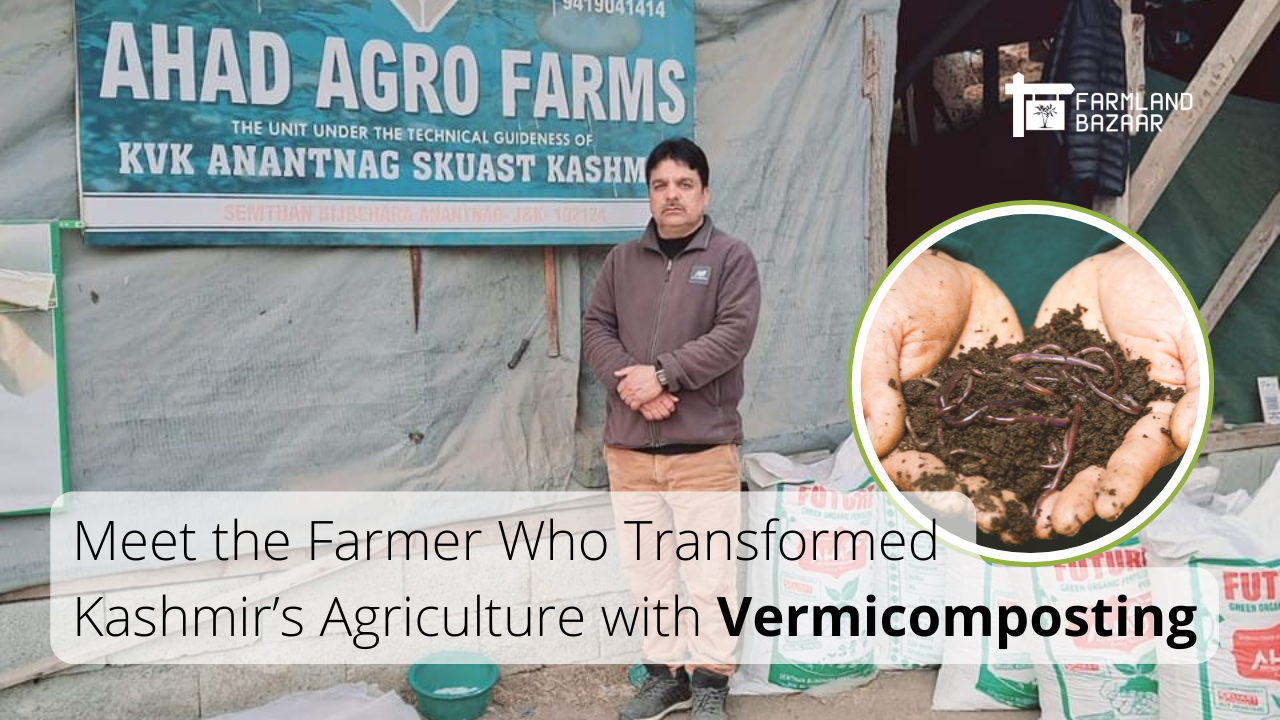
In the heart of Kashmir’s picturesque Anantnag district, where mountains stand tall with their snowy peaks and lush valleys are dotted with apple and walnut orchards, a silent revolution in organic farming is taking place. This transformation is led by Abdul Ahad Lone, a visionary farmer who turned his back on chemical-based agriculture to embrace a sustainable and profitable path - vermicomposting.
The Awakening: A Train Ride to Transformation
Abdul Ahad Lone’s journey into organic farming began in 1996, not in the fields but on a train journey from Mumbai to Kashmir. It was here that he met Swagata, an organic farmer from Sikkim, who introduced him to the long-term perils of chemical fertilizers and pesticides. This conversation left an indelible mark on Abdul’s mind.
For years, he stayed in touch with Swagata, discussing organic farming techniques over landline calls, as there was no YouTube or social media to turn to for quick learning. Inspired by these discussions, Abdul decided to take a leap of faith and shift towards sustainable farming practices.
The First Step: Setting Up a Vermicompost Unit
In 2002, determined to break free from chemical farming, Abdul converted his 40-kanal (5-acre) farmland into an organic haven. His first experiment was with vermicompost; a nutrient-rich organic manure made using earthworms. To master the process, he underwent a 15-day training at the Krishi Vigyan Kendra in Anantnag, where he learned the intricacies of composting using biodegradable waste, cow dung, and agricultural residues.
With an initial investment of just ₹10,000, he built a small shed, dug compost pits, and purchased tarpaulin sheets to protect the composting units. The results were astounding, his farm yielded double the production compared to chemical farming. His apples, walnuts, paddy, maize, peaches, and vegetables thrived with the use of vermicompost, proving that organic methods could be just as productive, if not more, than conventional farming.
From Farming to Entrepreneurship: Scaling Up Vermicompost Production
As word spread about the benefits of vermicompost, neighboring farmers became curious. They began visiting Abdul’s farm, observing the soil improvement, and soon started buying vermicompost in small quantities. Witnessing the rising demand, Abdul saw an opportunity to expand his work into a full-fledged business.
By 2009, he had scaled up his production and launched Ahad Agro Farms, selling high-quality vermicompost to local farmers. The business flourished, and to meet the increasing demand, Abdul constructed 350 composting beds, employing innovative techniques to sustain earthworm populations during Kashmir’s harsh winters.
His breakthrough came when he discovered that earthworms needed an escape route during extreme cold. Initially, he used cemented pits for composting, but most of the worms perished during the freezing winters. Upon closer observation, he noticed that worms in a kaccha (unsealed) corner of the pit had survived. This led him to switch to open-bed composting, allowing worms to burrow into the soil for insulation and emerge when temperatures rose.
A Business That Nurtures Both Soil and Society
Today, Abdul’s farm produces five tonnes of vermicompost daily, generating a daily income of ₹50,000 and an annual turnover of ₹1.5 crore. His impact goes beyond profits, his efforts have led almost the entire Simthan village to abandon chemical fertilizers in favor of organic farming.
He manufactures 36,000 bags of vermicompost annually, but the demand far exceeds supply. To cater to more farmers, Abdul now plans to scale up production to one lakh bags per year. His success has not only brought prosperity to his own household but has also inspired many others to venture into vermicomposting.
Empowering Villagers: From Waste to Livelihood
One of Abdul’s greatest contributions is his dedication to empowering unemployed youth and homemakers. He provides free training in vermicomposting, enabling others to start their own units. So far, he has trained around 25 young entrepreneurs and 150 homemakers, many of whom now run successful vermicompost businesses across Kashmir.
His trainees have experienced a significant financial transformation. Earlier, villagers would sell 50 kg of cow dung for ₹100. After learning composting, the same waste, when converted into vermicompost, sells for ₹400 per 50 kg, quadrupling their earnings.
Recognition and Awards: A Farmer’s Legacy
Abdul’s pioneering work has earned him numerous accolades, including the Progressive Farmer Award and the Entrepreneur Award from the Government of India. He has also been honored by Krishi Vigyan Kendra, Sher-e-Kashmir University of Agricultural Sciences and Technology (SKUAST-K), and various state governments, including Haryana, Delhi, and Gujarat.
Despite these awards, Abdul considers his greatest achievement to be the financial independence he has helped create for hundreds of rural families. “Meeting ministers and receiving awards is an honor, but my real reward is seeing local youth and homemakers earn their livelihood from what was once considered waste,” he says.
The Future: Expanding the Organic Movement
Looking ahead, Abdul envisions a future where organic farming becomes the norm rather than an exception. He is actively working on expanding Ahad Agro Farms, increasing vermicompost production, and advocating for policy support to help small farmers transition to organic methods. His journey serves as a beacon of hope, proving that sustainable farming can be both environmentally beneficial and economically rewarding.
A Tribute to Farmers and Organic Farming
Abdul Ahad Lone’s journey is an inspiring example of how passion, perseverance, and innovation can transform not only an individual’s life but also an entire community. His story is a testament to the fact that organic farming is not just beneficial for the environment but also highly profitable and sustainable.
Farmland Bazaar salutes farmers like Abdul who are revolutionizing agriculture with organic solutions. We aim to educate the nation about the beauty of being organic and profitable. If you are new to farming and want to explore organic methods and procedures, Farmland Bazaar is the place for guidance and inspiration.
Written by Farmland Bazaar Team
Agricultural assets advisor contributing to Farmland Bazaar v2. Focusing on organic investments, soil analysis reports, and deed checks.