
Amazon’s $30 Million Carbon Deal: Why Indian Farmland is the New Green Investment
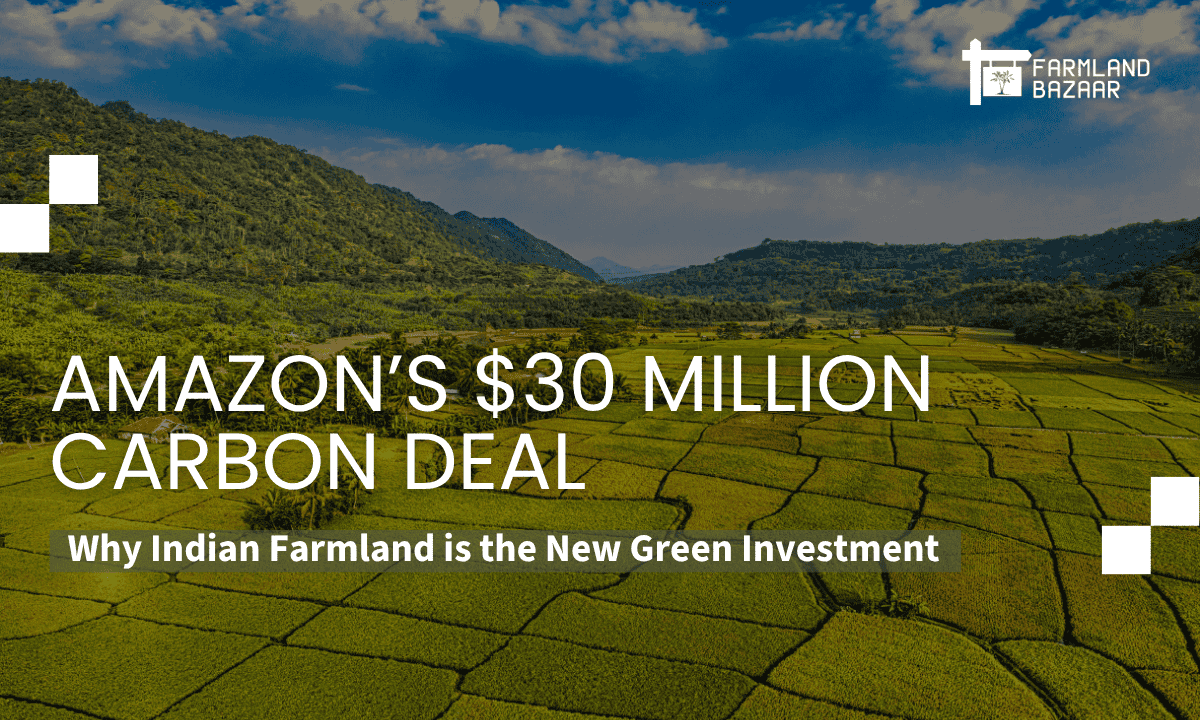
The story of Indian agriculture is shifting from the weight of the physical harvest to the value of the air above it. This transformation is not just about farming anymore; it is about a new kind of green gold hidden within the soil.
It began in the sprawling rice belts of Haryana and Punjab, regions famous for feeding the nation. For generations, the tradition has been to keep rice paddies drowned in standing water. However, beneath those shimmering fields, a silent chemical reaction was occurring. In the oxygen-deprived mud, bacteria produce methane, a greenhouse gas nearly 30 times more powerful than carbon dioxide at trapping heat.
Now, global giant Amazon has decided that stopping those bubbles of gas is worth exactly 30 million dollars, or approximately 280 crore rupees.
In a landmark deal, Amazon is not buying the grain; they are buying the avoided methane. By paying for the climate impact created by 13,000 farmers, they have officially turned the Indian paddy field into a high-tech financial asset.
The Strategy: 13,000 Farmers and the Second Harvest
The project is managed by the Good Rice Alliance, a powerhouse coalition including names like Bayer and Shell. The strategy is surprisingly simple but revolutionary. Instead of keeping fields perpetually flooded, farmers are taught Alternate Wetting and Drying, also known as AWD.
Farmers let the soil breathe for a few days before watering again. This leads to several major benefits:
-
The Environmental Result: Methane emissions drop by nearly 50%.
-
The Resource Bonus: Water usage, which is often the biggest cost for any farmer, drops by 30%.
-
The Financial Reward: Every tonne of carbon saved is verified by satellites and turned into a carbon credit, which Amazon buys to offset its environmental footprint.
The Opportunity: What is Lying Beneath the Surface?
For anyone looking at land today, this deal changes the math. You are no longer just looking at a patch of dirt; you are looking at a biological bank account. Here is where the real scope lies for future-focused buyers.
The Birth of the Dual-Income Farm
Until now, farmland returns were capped by what the market paid for a bag of rice. This deal proves that a second, invisible harvest exists. A carbon-ready farm now generates two streams of income: the physical harvest sold at the market and the digital harvest sold in US dollars to global tech firms.
Water Security as a Value Multiplier
In real estate, the old saying is location, location, location. In farmland, it is now water, water, water. Because the AWD method saves 30% more water, these farms are becoming climate-proof. While others struggle with depleting borewells, these managed lands remain productive and profitable, making them infinitely more valuable as long-term assets.
The Institutional Magnet
Amazon, Microsoft, and Google are currently scouring the globe for high-integrity nature projects. They are not interested in a single acre; they want large-scale, professionally managed land where data is tracked by satellites. This is shifting the market away from unorganized plots toward managed farmland models that are ready to be plugged into global climate markets.
Conclusion
We are witnessing the transformation of soil into a service. Just as software generates recurring monthly revenue, a well-managed farm can now generate recurring carbon income. The Amazon deal is just the proof of concept. India has over 45 million hectares of rice fields, and this deal covers only a tiny fraction of that potential. The scope is staggering. The most expensive land in the future will not just be the one closest to the highway, but the one with the healthiest, most carbon-efficient soil.
Frequently Asked Questions (FAQs) for Land Investors
-
What is the Amazon carbon credit deal in India?
Amazon has committed 30 million dollars to purchase carbon credits from 13,000 Indian rice farmers. The deal rewards farmers for reducing methane emissions through sustainable irrigation practices like Alternate Wetting and Drying (AWD). -
How do carbon credits increase farmland value?
Carbon credits provide a third layer of income beyond crop sales and land appreciation. Managed farmland that is eligible for carbon credits attracts institutional investors and global corporations, driving up the land's market premium. -
What is Alternate Wetting and Drying (AWD) in rice farming?
AWD is a water-management technique where rice fields are periodically drained and flooded rather than kept permanently submerged. This reduces methane production by 50% and cuts water consumption by up to 30%. -
Can small farmland owners participate in carbon markets?
While individual small plots face high verification costs, managed farmland models and farmer collectives (like the Good Rice Alliance) allow smallholders to aggregate their land and access global carbon buyers like Amazon and Shell. -
Is agricultural carbon trading legal in India?
Yes, India is actively developing its National Carbon Market (NCM). Global corporations currently buy credits through voluntary carbon markets to meet their Net Zero goals, making agricultural land a vital part of the climate economy.
Written by Farmland Bazaar Team
Agricultural assets advisor contributing to Farmland Bazaar v2. Focusing on organic investments, soil analysis reports, and deed checks.