
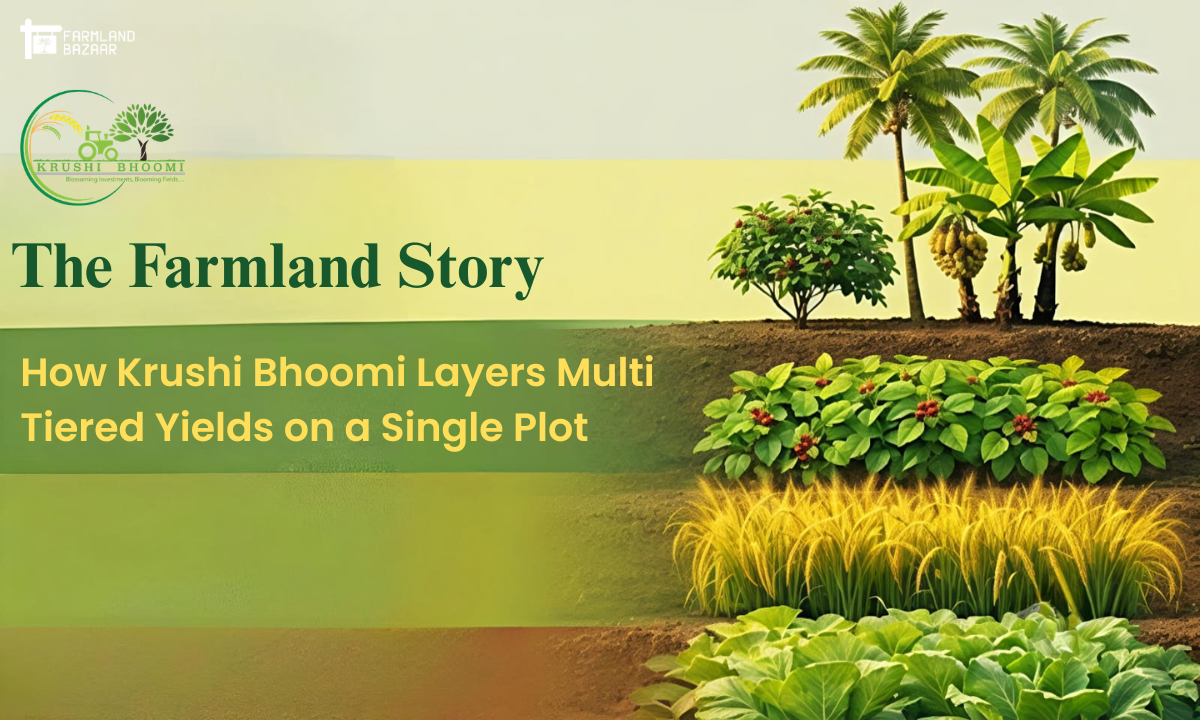
The Farmland Story: How Krushi Bhoomi Layers Multi-Tiered Yields on a Single Plot
There is a quiet shift happening among investors in Indian cities. Stocks, mutual funds and real estate in urban centers are still popular. But more and more professionals and business owners are looking at something stable, dependable, sustainable and tangible which is farmland. The reason is straightforward: farmland has an amazing recent track record.
The challenge, until recently, was access and operations. Most city dwellers do not know how to run a farm. They do not have the time, the local knowledge or the network to manage agricultural land from a distance. Krushi Bhoomi Farms was built to solve exactly that.
Krushi Bhoomi Farms is a managed farmland investment project by Fortuners Elixir Infra. The idea is simple. The idea is simple. An investor purchases a farmland plot in Kollegal, Karnataka. A professional team handles everything else plantation, crop management, soil care, seasonal operations and day-to-day farm activities. Like how a managed farmland model works, the investor owns the land, the team runs it and the owner benefits from both the income and the long-term appreciation.
Why Kollegal?
Not all farmland is equal. Location, soil quality, water access and infrastructure all determine whether a piece of land generates returns or simply sits idle. Kollegal, in Karnataka's Chamarajanagar district, checks every box.
The region has fertile red soil suited for fruit cultivation, timber, and mixed farming. The climate is favorable throughout the year. And the land benefits from water availability tied to the Kaveri river system, a significant advantage for consistent agricultural output.
On the infrastructure side, the region is growing fast. The Mysore Expressway has already improved connectivity between Bengaluru, Mysuru, and surrounding areas. Better road access means greater demand for land nearby and greater demand typically leads to appreciation.
The planned Mekedatu Project is expected to further strengthen water infrastructure across the wider region, adding long-term support for agricultural productivity. Beyond farming, Kollegal sits in the heart of some of Karnataka's most visited natural destinations:
-
Shivanasamudra Falls
-
MM Hills
-
BR Hills
-
Cauvery Wildlife Sanctuary
This combination of productive agriculture, improving infrastructure and growing eco-tourism interest, makes Kollegal a location with multiple tailwinds behind it.
How the Farm at Krushi Bhoomi Generates Income
Krushi Bhoomi Farms is not a single-crop investment. The model is built around several income streams working together, some that pay out annually, some that build value quietly over years.
-
Fruit Trees and Seasonal Crops: Each plot comes with around 20 to 25 fruit-bearing trees including mango, guava, chikoo among others. As the trees mature, they produce regular harvests that generate annual income for the plot owner. Seasonal vegetables and flowers are cultivated between harvests, ensuring the land stays productive throughout the year rather than lying unused between fruit cycles.
-
Livestock: Investors who choose to participate can opt into integrated livestock operations managed entirely by the on-ground team. Dairy farming and sheep rearing provide additional income through milk production and livestock sales without requiring any direct involvement from the owner.
-
Timber and Sandalwood: This is the long-game layer of the investment. Alongside the fruit trees and seasonal crops, selected timber and sandalwood trees are planted across each plot. These trees grow steadily over the years and are not harvested until they reach full maturity. Sandalwood, in particular, is one of India's most valuable agricultural commodities. A mature sandalwood plantation can command significant value.,making this component a meaningful wealth-creation asset over a 10 to 15 year horizon.
The result is a portfolio within a plot: short-term income from crops, medium-term returns from livestock, and long-term appreciation from timber.
More Than a Financial Asset
Numbers matter but farmland offers something beyond returns. A plot owner can visit the land, walk through it and watch it grow over time. That is something most modern investments simply cannot offer.
For many investors, owning farmland carries a deeper appeal:
-
Inflation protection: Land and food have historically held their value even when currencies do not.
-
Generational wealth: Agricultural land can be passed on to children and grandchildren as a productive, appreciating asset.
-
Sustainability: At a time when environmental awareness is growing, owning productive green land feels meaningful not just financially, but personally.
-
A retreat from the city: Many plot owners visit their farms on weekends. In a region as naturally beautiful as Kollegal, the farm becomes both an investment and a getaway.
Who Is This For?
Krushi Bhoomi Farms is designed for people who want farmland ownership without the operational headaches of farming.
It suits:
-
Salaried professionals looking for an investment outside the stock market
-
Business owners seeking stable, long-term asset growth
-
Families building a legacy asset to leave for the next generation
-
First-time agricultural investors who want managed exposure to this asset class
-
Urban residents who want a green connection outside city life
With over 200 acres developed across multiple phases and a growing community of 250+ plot owners, the project has already demonstrated steady demand.
The Bigger Picture
India's agricultural land market is entering an interesting phase. Urban migration continues to accelerate. Infrastructure is pushing into previously underdeveloped regions. And a new generation of investors, comfortable with alternative assets, is looking at farmland the way their parents looked at residential property: as a foundation for long-term wealth.
Managed farmland projects bridge the gap between investor interest and operational complexity. They make it possible for someone in Bengaluru or Hyderabad to own productive agricultural land, receive income from it, and benefit from its appreciation without relocating or learning how to farm.
Krushi Bhoomi Farms is one of the clearer examples of this model done well. For investors who want something real, something productive and something that lasts; this is worth a serious look.
Written by Farmland Bazaar Team
Agricultural assets advisor contributing to Farmland Bazaar v2. Focusing on organic investments, soil analysis reports, and deed checks.