
Regulatory Updates: Karnataka bans conversion of small agricultural plots below 5 guntas
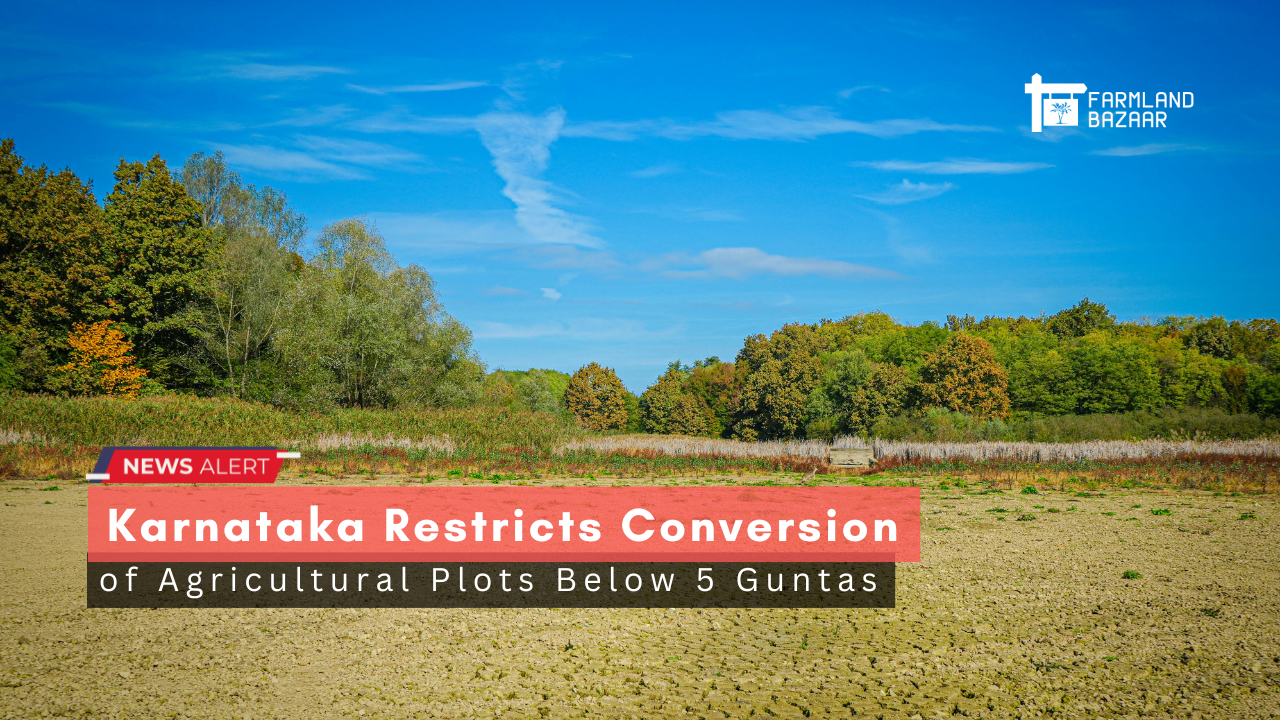
In a significant step to regulate land use and protect agricultural areas, the Karnataka government has announced a ban on the conversion of agricultural plots measuring 5 guntas or less for non-agricultural purposes. The move is expected to directly impact land transactions, especially in and around rapidly expanding cities like Bengaluru, where small land parcels have often been sold as future residential sites.
What does the new rule say?
Under the latest directive, authorities have been instructed not to approve any applications for conversion of agricultural land if the plot size is 5 guntas or below. This effectively means that such small parcels cannot be legally turned into residential or commercial land.
Officials at the district level, particularly Deputy Commissioners, have been asked to strictly enforce this rule. The government has also indicated that any violations or approvals granted against the directive could invite disciplinary action, underlining the seriousness of the policy.
Why was this decision taken?
The decision comes in response to a growing trend of agricultural land being fragmented into smaller plots and sold in the market. Over time, many landowners began dividing larger land holdings into tiny portions, often below 5 guntas, to make them more affordable and easier to sell.
These small parcels were commonly marketed as “revenue sites,” with buyers being promised that they could eventually convert the land for residential use. However, in many cases, such conversions either did not materialise or ran into legal complications.
To break it down simply:
- Large agricultural land was split into smaller plots
- These plots were sold individually to multiple buyers
- Buyers were often assured of future conversion
- In reality, many faced legal uncertainty or disputes
The government’s move aims to stop this cycle and prevent misuse of agricultural land.
Misuse of land records and 11E sketch
A major concern flagged by authorities was the misuse of a document known as the 11E sketch, which is used to define land boundaries before division or sale.
Legally, this document is meant to be issued only once, typically in genuine cases such as family partitions. However, officials found that it was being repeatedly generated for the same piece of land to enable continuous fragmentation.
To address this, the government has directed officials to:
- Identify cases where 11E sketches have been misused
- Initiate action on their own (suo motu)
- Cancel such illegally obtained documents
This step is expected to bring more transparency to land records and prevent manipulation.
What does this mean for buyers?
For buyers and small investors, this rule changes the landscape significantly. Purchasing a small agricultural plot with the expectation of converting it into a residential site is no longer a practical option. At the same time, the move brings certain advantages. It reduces the risk of investing in unauthorized layouts and ensures better clarity regarding the legal status of land.
However, it may also limit the availability of low-cost land options that were earlier popular among first-time investors.
The new rule does not prohibit the ownership or sale of small agricultural plots. Buyers can still purchase land below 5 guntas, but only for agricultural use. In simple terms, while ownership is permitted, changing the land use from agricultural to residential or commercial is no longer allowed for such small parcels.
Conclusion
Karnataka’s decision marks a strong move toward regulating land fragmentation and ensuring planned development. By restricting conversion of very small agricultural plots, the government aims to curb unauthorized layouts, protect farmland, and bring more discipline to land transactions.
For buyers, the key takeaway is clear, always verify land use permissions and avoid relying on future conversion promises.
Stay tuned with Farmland Bazaar to stay updated for more agricultural and land investment news.
Written by Farmland Bazaar Team
Agricultural assets advisor contributing to Farmland Bazaar v2. Focusing on organic investments, soil analysis reports, and deed checks.