
The Rise of the Hybrid Asset: Why Managed Farmland is the Investment Trend of 2026
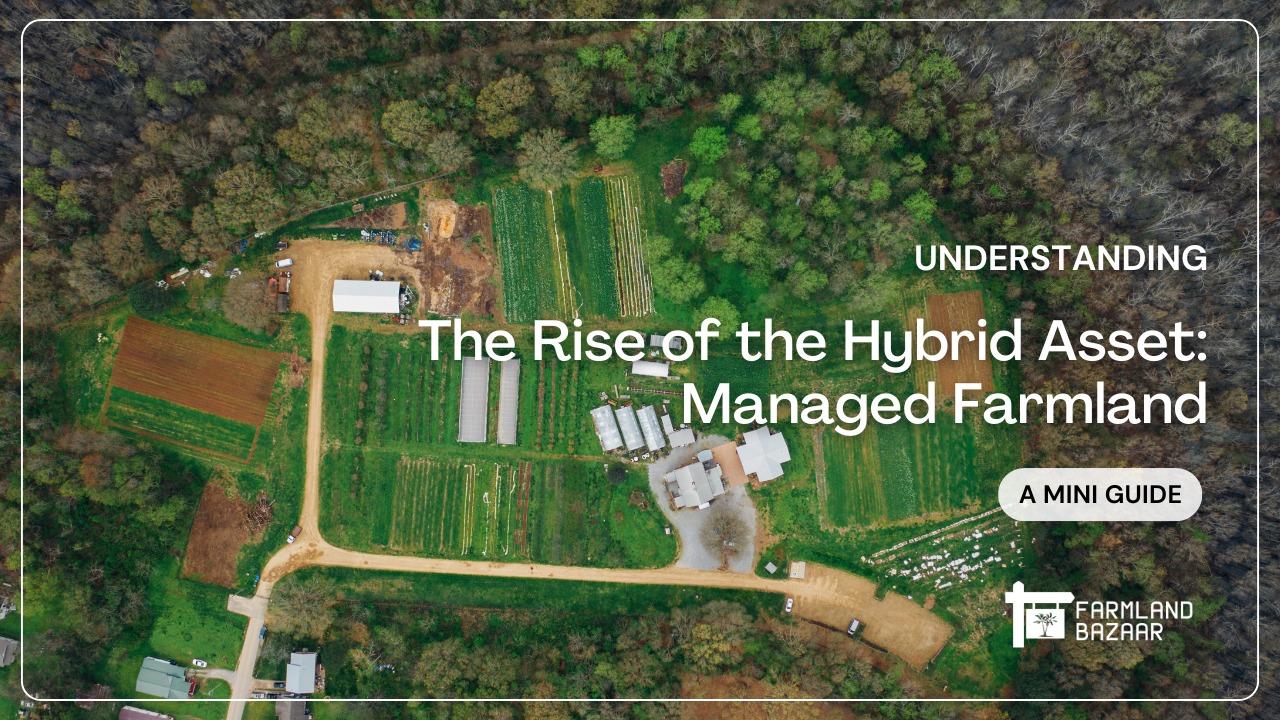
A Hybrid Asset Class is an investment that delivers value in more than one way. Managed farmland stands out because it combines financial stability, sustainable growth, and lifestyle use in a single asset. This multi-layered value is why managed farmland is becoming a preferred choice for investors in 2026.
Alternative Real Estate is the foundation of managed farmland. Agricultural land is a real, limited asset that has shown steady appreciation over long periods. It behaves differently from stocks and mutual funds and is less affected by market swings. Farmland also works as an inflation hedge, as rising food prices and demand tend to increase both farm income and land value. This makes it a strong long-term store of wealth.
Sustainable Investment forms the second circle of value. Managed farmlands follow organic and eco-friendly farming practices that protect soil and water. Many projects include agroforestry and long-term tree crops, which help capture carbon and create additional future returns. Investors gain exposure to the fast-growing organic and green economy while professionals handle farm operations and compliance.
Lifestyle Product is the third and differentiating layer. Today’s managed farmlands are planned as nature-centric communities rather than empty land parcels. They offer access to green spaces, wellness activities, weekend stays, and fresh produce grown on-site. This transforms the investment into a place for rest and recreation, improving quality of life alongside financial returns.
At the intersection of these three circles lies the true strength of managed farmland. It appreciates like real estate, earns income like a business, and delivers personal and lifestyle value like a service. This balanced mix is what defines managed farmland as a genuine hybrid asset class for modern investors.
Why Managed Farmland is on the Rise
The surge in managed farmland isn't just a post-pandemic "trend"; it is a financial correction. Investors are realizing that while they were chasing volatile stocks or stagnating apartment rentals, agricultural land was quietly outperforming both.
Here is the breakdown of why this asset class is rising, backed by historical ROI, shifting interests, and new-age developments.
1. Global & India Farmland Market Trends
Farmland is one of the most stable investment classes globally, with average annual total returns (income + appreciation) of ~8–12% in mature markets (e.g., North America, parts of Europe) thanks to steady food demand and limited arable land. Institutional interest in sustainable agriculture, carbon farming and food security is driving capital into farmland in developed markets.
India holds approximately 141 million hectares of agricultural land, making it one of the largest rural land markets worldwide. According to FarmlandBazaar, the organised managed farmland segment remains early-stage, with 20,000–25,000 acres under management and an estimated market value of ₹5,000–7,000 crore as of 2024. In select micro-markets, particularly around Bengaluru, Chennai, Hyderabad and Pune, managed farmland has historically delivered ~12–15% annualised growth (including capital appreciation and passive incomes) , driven by urban proximity, infrastructure expansion, and professional farm monetisation.
For investors seeking portfolio diversification, farmland offers a stable and attractive alternative. Unlike volatile real estate markets, agricultural land tends to retain and grow in value over time, due to its limited supply, essential economic role and favourable tax treatment in India.

2. Shifting Interests: The "Rurban" Migration
The "Why Now?" is driven by a fundamental shift in what wealthy Indians value. It’s no longer just about a "pincode" in the city; it’s about a "lifestyle" outside it.
-
Post-Pandemic Priority: A Knight Frank report highlighted a massive shift: 60% of homebuyers now prioritize "larger homes with outdoor spaces," up from just 35% pre-pandemic. This has directly fueled the demand for farm plots that offer open air.
-
The "Status" Asset: Owning a managed farm is the new status symbol. Reports indicate that 21% of Ultra-High-Net-Worth Individuals (UHNWIs) in India have already allocated capital to agricultural land, treating it as a "luxury asset" similar to art or gold.
-
The "Passive" Professional: The rise of "Farm-as-a-Service" (FaaS) has been a game-changer. Today, busy professionals like tech workers, doctors and business owners invest in farmland without needing to farm it themselves. Management companies take care of cultivation, compliance, security, and harvest, while investors enjoy the benefits of ownership without the daily grind. This model has removed the old barriers to agricultural land investment and made it accessible to people who want passive income and lifestyle access.
3. Development & Amenities: From "Mud" to "Luxury"
The product itself has evolved. 2026’s managed farmland is not a barren plot; it is a serviced estate.
-
Resort-Level Infrastructure: Resort-level infrastructure is now a standard feature in many projects. Modern managed farmlands offer clubhouses, swimming pools, holiday cottages, landscaped gardens, walking trails, outdoor play areas and community spaces that rival 5-star resorts. These amenities let investors use their farmland as a free holiday home that also appreciates over time. Managed farmlands like Neralu Farms near Bangalore, plots come with clubhouses, cottages, swimming pools, outdoor games areas and 30+ premium amenities already integrated into the estate design.
-
Gated Community Security:Security has long been a concern for land buyers. Today it’s no longer a worry. The gated community model with 24/7 security guards, CCTV surveillance, boundary fencing and controlled entry ensures that farmland ownership feels as safe as owning a city apartment. Farmland Developers Hosachiguru and Trguna Projects offer round-the-clock monitoring and organized gated environments in their farmland projects so investors and families can visit without fear of encroachment or trespassers.
-
Productive Landscaping: Productive landscaping is a big part of the new product design. Instead of empty land, developers now plant high-value timber (such as mahogany and sandalwood), fruit orchards, and ornamental trees long before sale. This means the investor buys a "pre-loaded" asset that will start generating tax-free cash flow in 5-10 years. Projects like SPP farms include red sandalwood saplings on every plot, resort-style common spaces, and profit-sharing models tied to agroforestry returns.
4. Education & Transparency: The Tech Layer
The "wild west" days of buying land are over. Technology has brought transparency, making investors more confident.
-
Online marketplaces: Today, online farmland marketplaces like FarmlandBazar allow investors to discover verified managed farmland projects directly on their mobile or laptop. Instead of relying on informal references, buyers can access project details, developer information, location data, pricing and legal status in one place. This direct flow of information from developers to investors has reduced dependence on unaccountable intermediaries and improved decision-making.
-
Satellite Due Diligence: Satellite-based due diligence has changed how farmland is evaluated. Investors now use agri-tech platforms such as Farmonaut to assess soil health, vegetation, water availability, and crop history through satellite imagery. This enables data-backed evaluation of land productivity even before a site visit.
-
Digital Records: Another major shift has come from digitised land records. Government platforms like Bhoomi in Karnataka and Dharani in Telangana allow online access to ownership records and transaction history. This has significantly lowered legal and title risks, making educated investors more comfortable deploying larger capital into rural land.
The rise is not accidental. It is the result of high historical returns meeting modern lifestyle needs, packaged in a safe, managed product. What was once seen as a traditional, fragmented asset has evolved into a structured, transparent, and multi-benefit investment.
In a world of volatile markets, overcrowded cities, and growing environmental awareness, investors are no longer satisfied with returns alone. They seek stability, sustainability, and personal value and managed farmland delivers all three. It offers the resilience of real assets, the growth of green investing, and the emotional comfort of owning space, nature, and time away from the city. That is why managed farmland is not merely the investment trend of 2026, but a lasting evolution in how modern investors think about wealth
Platforms like Farmland Bazaar reflect this shift. By advocating sustainable asset ownership and enabling access to verified managed farmland projects, FarmlandBazaar is helping build a community of informed, long-term investors who value transparency, responsible land use, and patient wealth creation. The focus is not just on transactions, but on nurturing a shared belief in land as a productive, ethical, and enduring asset.
Written by Farmland Bazaar Team
Agricultural assets advisor contributing to Farmland Bazaar v2. Focusing on organic investments, soil analysis reports, and deed checks.