
Why Investing in Farmland Is Game-Changer Professionals Have Been Waiting For

Across India's bustling metros, a quiet revolution in real estate is unfolding. Doctors, software engineers, architects, startup founders, corporate executives and others, basically, the people who once chased apartments and commercial plots are now turning their eyes to something far more elemental: the land or a farmplot. Interestingly they are not chasing to be farmers, but as investors, visionaries and as people yearning for a deeper connection with life beyond the screen and concrete world.
FarmlandBazaar, India's fastest-growing farmland marketplace, recently spoke with several leading developers to understand this seismic shift. What we found was nothing short of a movement.
1.The New Way In: Managed, Small parcels, Community Driven, Tax-Free and Effortless
Earlier If there was one barrier that kept urban professionals away from farmland, it was the sheer complexity of managing it and absence of like minded neighborhoods. Firstly the need to understand soil types, crop cycles, irrigation schedules and labour management; Secondly the rise of gated farmland communities and more than anything the awareness around the benefits of owning farmlands has now dismantled the barriers entirely. Today’s managed farmland model is designed from the ground up for the busy professional who has capital, intent and zero time for agricultural logistics.
Equally transformative is the emergence of fractional and small-parcel ownership. Gone are the days when farmland investment meant purchasing dozens of acres at once. Today, professionals can enter with plots as compact as half an acre or even smaller curated parcels within a larger managed community. This dramatically lowers the financial threshold, making farmland accessible not just to the ultra-wealthy but to mid-career engineers, young entrepreneurs and first-time alternative investors.
As Sundar Naidu, Founder, Hiland Realty, puts it:“ We have investors who start with just a quarter acre or half an acre to experience farmland ownership, create a portfolio hedge and reconnect with nature. The biggest shift today is that farmland investing no longer demands a large upfront commitment. People can now participate with smaller land parcels, enjoy the experience of owning a farm, spend time amidst nature and benefit from an asset class that was once considered accessible only to a select few. This flexibility has made farmland ownership relevant and attainable for a much wider audience.”
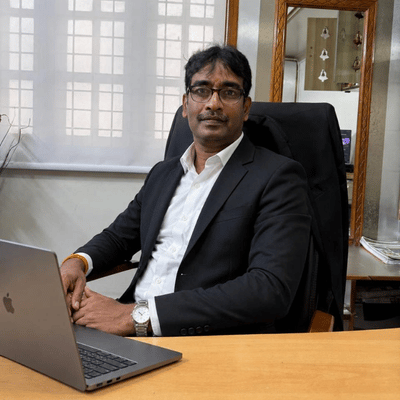
Sundar Naidu, Founder, Hiland Realty,
The managed model also brings top graded transparency to what was once an opaque, relationship-driven market. A software engineer in Bengaluru can invest in a farm plot in Madhya Pradesh with the same confidence they would place in a listed mutual fund. Due diligence, documentation and delivery are all handled professionally.
In short, the farmland investment of 2026 asks nothing of the professional except a decision. The land and the developer does the rest.
2. The Second Home Reimagined
Earlier the concept of second homes for Indian professionals was confined to hill-station cottages or beach villas, typically, properties that were disconnected from the core city but were also far from their workplace, children's schools and cannot be practically visited every weekend. Due to inaccessibility they were expensive to maintain and were used only occasionally. Managed farmlands is now rewriting that narrative, offering an alternative that combines accessibility, nature, lifestyle value and long-term wealth creation in a way traditional second homes rarely could.
Managed farmland communities are emerging on the outskirts of cities like Bengaluru, Pune, Hyderabad and Delhi NCR, offering curated parcels where professionals own the land, but specialists manage the cultivation. Weekend escapes have never felt accessible and purposeful.
"When I showed a client of mine, a 44-year-old tech professional from Bengaluru, her first yield report from the mango orchard she owns, she became emotional. She was amazed that she could enjoy the fruits from trees growing on her own land without having to manage the day-to-day work herself. That, to me, is what farmland is truly about. In a world where so much of our wealth exists only on screens and statements, farmland gives people something tangible, something they can see, visit and pass on, while still benefiting from an ownership experience that feels remarkably effortless." says, Srinivas Gowda, Founder, Iconic Farms
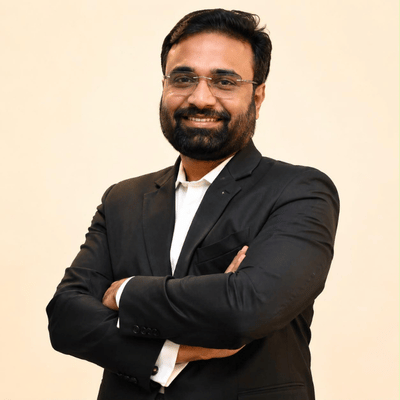
Srinivas Gowda, Founder, Iconic Farms
The concept of an 'agri-retreat' which is basically a farmland plot with a weekend cottage, walking trails and a working orchard is gaining traction fast. It blends the aspiration of a second home with the practicality of a productive asset.
3. Sustainability Is No Longer a Weekend Hobby
Climate anxiety is real and it's reshaping investment psychology. For a generation of professionals acutely aware of their carbon footprint, owning farmland is one of the most tangible acts of environmental stewardship available to a non-farmer. Planting fruit trees, restoring degraded soil, harvesting rainwater and growing food without chemical inputs are the activities that managed farmland investors participate in.
Rajesh Parai, Founder, GMR properties adds "A large share of our buyers are professionals in their late 30s and 40s. They aren't investing in farmland simply to escape urban life; they're investing because they increasingly see environmental stewardship as an integral part of long-term wealth creation. For them, a regenerative farm is more than a physical asset, it represents resilience, sustainability and a legacy aligned with the future."

Rajesh Parai, Founder, GMR properties
Several farmland developers are now integrating solar micro-grids, composting systems, and natural water harvesting into their projects making each plot a small but meaningful node in a larger sustainability network. Investors get ESG credentials; the planet gets a break.
4. Riding the Organic Food Wave
India's organic food market is constantly growing, yet supply is struggling to keep pace with demand, both in terms of quantity and affordability. Moreover the rise of falsely marketed "organic" products has eroded consumer trust. Many buyers remain skeptical about organically labelled produce sourced through conventional supply chains, questioning its authenticity and traceability.
This growing trust deficit is also one of the reasons why urban professionals are increasingly exploring managed farmland investments. Beyond the potential for long-term appreciation, these assets offer access to produce cultivated on their own land, using transparent and sustainable farming practices. With professional teams overseeing everything from soil preparation and sowing to cultivation and harvesting, these managed farmlands provide a convenient way to participate in agriculture while ensuring greater visibility into how food is grown.
"Today's farmland investors are not just seeking financial returns; they're seeking confidence in what they consume. Knowing that the fruits and vegetables reaching their plates originate from their own professionally managed farms creates a level of trust that conventional supply chains often struggle to offer. Ownership, transparency and traceability are becoming as important as yield." says Jaydeep Bhalerao, Founder, JD homes.

Jaydeep Bhalerao, Founder, JD homes.
For investors, managed organic farmland represents more than an alternative asset class. It combines the benefits of land ownership, professionally managed operations and access to traceable produce at a time when consumers are placing a premium on authenticity and food quality. As demand for verified organic products continues to rise, managed farmland is emerging as a compelling intersection of wealth creation, sustainable agriculture, and conscious consumption.
5. Multiple Income Streams from a Single Asset
Perhaps the most compelling argument for farmland investment among financial professionals is its ability to generate layered income streams from a single parcel of land, interestingly its a diversification within diversification.
Consider what a single managed farmland plot can simultaneously generate: agricultural yield income from crops or orchards; timber or biomass income from trees; agri-tourism revenue from farm visits; carbon credit income from afforestation and regenerative practices; and long-term capital appreciation on the land itself.
"We often tell our clients, particularly professionals and entrepreneurs, to look at modern farmland as a layered asset rather than a single investment. You're not relying on just one source of value creation. There is agricultural income, tree-based value appreciation, hospitality and experiential opportunities, potential carbon-linked benefits and, above all, the long-term appreciation of the land itself. That's what makes farmland unique today. That's typically a portfolio inside a portfolio, with multiple growth drivers working in parallel." says Raghunath Bhattagiri, Founder, Triguna Country Homes
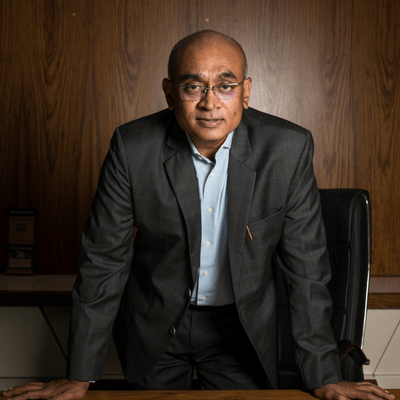
Raghunath Bhattagiri, Founder, Triguna Country Homes,
Agri-tourism, in particular, is emerging as an unexpected revenue driver. As urban families seek authentic rural experiences, farm stays have turned farmland plots into experiential destinations with ROI that would surprise even seasoned real estate investors.
Carbon credits present another rapidly evolving income layer. Farmland with afforestation, native tree planting or organic practices can qualify for carbon sequestration credits; a market that is growing really fast.
6. The Unmeasurable ROI: Living Close to Nature
Not all returns show up on a spreadsheet. FarmlandBazaar has consistently heard from investors that the decision to buy farmland was as much a quality-of-life choice as a financial one. And in a post-pandemic world where mental health, work-life balance and meaningful living have moved to the top of the agenda, this is no small thing.
The act of visiting your own farm, walking through your own orchard, breathing clean air, watching something grow that your name is attached to, surely offers a psychological dividend that no mutual fund can replicate.
Samee ulla khan, Founder, Visionary green estates recalls,"Some of our most memorable conversations with investors are not about yields or appreciation, but about experiences. It's about bringing children to a farm for the first time, harvesting fruit from trees they own, or simply spending a weekend surrounded by open spaces. Farmland offers a sense of connection, ownership, and continuity that many urban professionals feel is missing from their everyday lives. In many ways, it is an investment in lifestyle and legacy as much as it is in land."

Samee ulla khan, Founder, Visionary green estates
Living close to nature, especially if it's easily accessible and is managed by a professional team, rewires something in the urban professional. It resets priorities. It creates a sense of legacy. Investors talk about their farmland as something they'll pass on to their children, not sell in five years.
This long-horizon thinking is, in itself, a marker of healthy investment psychology.
7. Why Professionals Are the Ideal Farmland Investor
There's a reason that businessmen, engineers, architects, doctors and senior managers are the fastest-growing buyer segment in the managed farmland space. These are people with disposable income, a long investment horizon, a tolerance for moderate risk and an increasing desire for meaning alongside money.
They are also people who understand delegation. The managed farmland model is built for them. They don't need to know how to grow a coconut; they need to trust the people who do, and the platform that connects them.
Bhuvaneshwari Selvaputhiran Doss, Founder, MK Infra says, “Our typical buyer today is a 40-plus professional with a stable career and growing disposable income, but they're not looking for just another asset to add to their portfolio. They already have apartments and traditional investments. What they're looking for now is something they can actually experience and feel connected to. Farmland offers that. It's not another flat that sits occupied by tenants for years; it's a place they can visit, spend time at, watch evolve, and share with their families. For many of our buyers, it's as much about creating a legacy and meaningful experiences as it is about long-term wealth creation."

Bhuvaneshwari Selvaputhiran Doss, Founder, MK Infra corp
Platforms like FarmlandBazaar have simplified farmland investing by creating an easy-to-use ecosystem where investors can discover properties that align with their goals, preferences and investment aspirations. Through its intuitive interface and expert guidance, FarmlandBazaar helps investors identify the right farmland opportunities based on factors such as location, budget, lifestyle aspirations, and return expectations.
At FarmlandBazaar, we believe that the most meaningful wealth is built on real, tangible foundations; land, food, nature and legacy. Across conversations with leading agri-developers and our growing community of investors, one belief stands out clearly: farmland is no longer a niche idea. It is fast emerging as the next frontier of purposeful investing. For professionals asking whether farmland belongs in their portfolio, the answer, based on everything we are seeing on the ground, is a clear YES. We invite you to explore it, experience it and grow with it.
Written by Farmland Bazaar Team
Agricultural assets advisor contributing to Farmland Bazaar v2. Focusing on organic investments, soil analysis reports, and deed checks.